Views: 0 Author: Site Editor Publish Time: 2023-09-18 Origin: Site
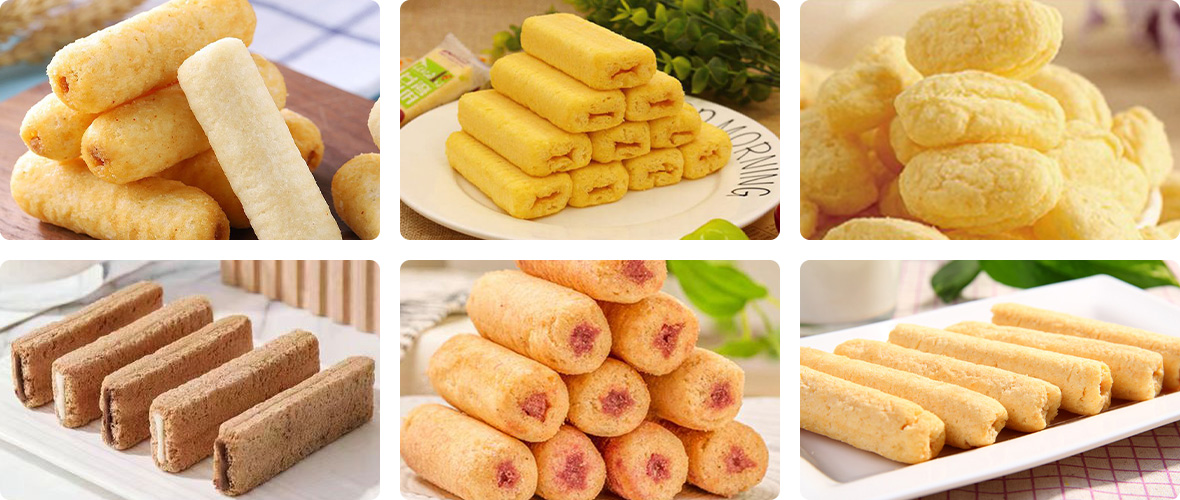
A nutritional rice production line converts prepared rice flour, broken-rice flour, grain powders or other compatible formulations into rice-shaped kernels through mixing, conditioning, twin-screw extrusion, shaping, drying and cooling.
Depending on the formulation and intended market, the finished product may be described as:
Nutritional rice
Fortified rice kernels
Reconstituted rice
Artificial rice
Multigrain rice
Extruded rice
Quick-cooking or instant rice products
These names are not always interchangeable.
Fortified rice kernels contain an approved vitamin and mineral premix and are normally blended with conventional rice at a specified ratio. Multigrain or reconstituted rice may use grain flour and other food ingredients without making a regulated vitamin or mineral fortification claim.
Instant rice usually requires a process that allows faster preparation or rehydration. Its processing requirements may differ from those for fortified rice kernels.
The final production line must therefore be designed around a clearly defined finished product and applicable food regulations.
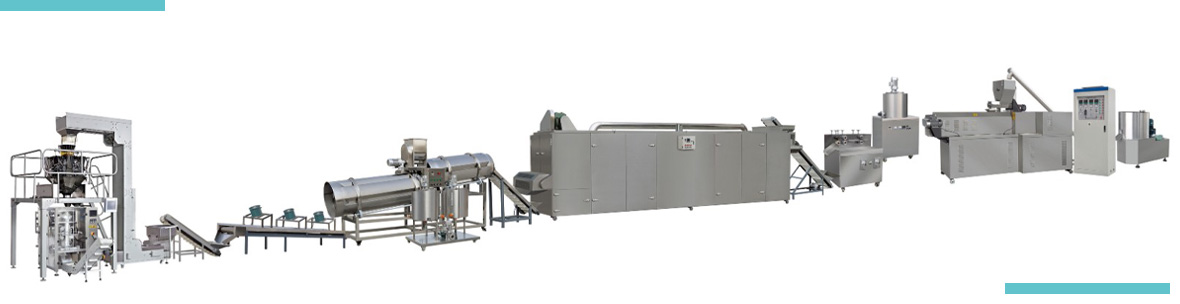
A general extrusion-based process may follow this sequence:
Raw-Material Preparation → Grinding → Weighing → Mixing → Moisture Conditioning → Twin-Screw Extrusion → Rice-Grain Shaping → Cooling and Separation → Drying → Final Cooling → Inspection → Blending or Packaging
The LooMak product configuration currently lists the following main equipment flow:
Powder Mixer → Vacuum Feeder → Twin-Screw Extruder → Cooling Vibrating Machine → Air Conveyor → Multi-Layer Dryer
Additional grinding, blending, inspection and packaging equipment may be required according to the raw material and finished-product standard.
The process begins with rice flour, flour produced from suitable broken rice, or another approved grain formulation.
Possible raw materials include:
Rice flour
Broken-rice flour
Corn flour
Millet flour
Oat flour
Buckwheat flour
Other compatible grain powders
Starch
Approved binding or processing ingredients
Vitamin and mineral premix, when producing fortified kernels
Other approved food ingredients
Raw materials should be inspected before use.
Important characteristics include:
Particle size
Moisture
Starch content
Protein content
Fat content
Fiber content
Color
Odor
Microbiological condition
Foreign-material content
When whole grains or broken rice are used, grinding and sieving may be required before mixing.
The dry ingredients are weighed according to the product formulation and mixed until they are distributed uniformly.
Uniform mixing is especially important when a vitamin and mineral premix is used. Uneven distribution can lead to unacceptable variation between finished kernels.
The mixing process should control:
Ingredient sequence
Batch size
Mixing time
Mixer fill level
Premix addition method
Cross-contamination
Batch identification
Cleaning between formulations
A validated formulation and mixing procedure should be used for products carrying a nutritional or fortification claim.
Water is added to create a formulation suitable for extrusion.
The required moisture depends on:
Rice flour characteristics
Starch content
Protein and fiber level
Extrusion temperature
Screw configuration
Target kernel texture
Final drying requirements
Insufficient moisture may result in poor forming, excessive mechanical load or damaged kernels. Excessive moisture may produce weak, sticky or difficult-to-dry kernels.
Water addition should be controlled rather than estimated only by visual appearance.
The conditioned material enters the twin-screw extruder.
Inside the barrel, the screws continuously convey, mix and process the material. The combination of screw movement, temperature, pressure, moisture and residence time changes the flour mixture into a form that can be shaped.
Important extrusion variables include:
Feed rate
Water addition
Screw speed
Barrel-zone temperatures
Screw configuration
Die pressure
Material residence time
Cutter speed
The correct settings depend on whether the line is producing fortified kernels, multigrain rice, reconstituted rice or another rice-shaped product.
At the end of the extruder, the processed material passes through a die that forms a rice-like profile.
A cutting system divides the continuous material into individual kernels.
The die and cutter affect:
Kernel length
Kernel width
Thickness
End shape
Surface appearance
Uniformity
Number of broken kernels
Similarity to the reference rice
Different rice markets may prefer different grain lengths and shapes. A product drawing or physical sample should be provided before die manufacturing.
Freshly formed kernels may be warm and soft.
A vibrating or cooling system helps separate the kernels and reduce sticking before drying.
This stage should be adjusted to avoid:
Kernels sticking together
Excessive deformation
Surface damage
Uneven dryer loading
Excessive breakage
The transfer system should move the product gently and distribute it evenly across the dryer inlet.
Drying reduces the moisture of the formed kernels to a level suitable for the intended product and storage conditions.
A multi-layer dryer can provide controlled residence time and airflow while reducing the required floor length.
Drying variables include:
Inlet moisture
Target final moisture
Air temperature
Air velocity
Product bed depth
Belt speed
Residence time
Dryer-zone settings
Exhaust-air control
Drying too rapidly can create cracks, deformation or uneven internal moisture. Insufficient drying can increase sticking, spoilage risk and storage instability.
The drying profile should be developed from the actual formulation and kernel size.
After drying, the kernels should be cooled before inspection, blending or packaging.
Packaging warm product can cause condensation inside the package. Product temperature should therefore be compatible with the packaging-room conditions.
Cooling should also avoid excessive impact that could create broken kernels.
Finished kernels should be evaluated against the target specification.
Typical quality checks may include:
Kernel dimensions
Shape uniformity
Color
Surface condition
Broken-kernel percentage
Final moisture
Bulk density
Cooking time
Water absorption
Cooked texture
Aroma and flavor
Storage stability
Nutrient content, when applicable
Microbiological requirements
Packaging integrity
The required test methods and limits depend on the product, destination market and applicable regulations.
Fortified kernels are normally produced as a concentrated ingredient and then blended with conventional rice at a controlled ratio.
The required blending ratio depends on:
Premix concentration
Target nutrient levels
National regulations
Product specification
Milling and distribution system
Quality-control procedure
The extrusion-line supplier should not determine nutritional claims without an approved formulation and regulatory specification.
Reconstituted rice products may be packed directly or blended with other rice and grain products, depending on the intended product.
Products marketed as instant or quick-cooking rice require validation of preparation time, rehydration, texture and cooking performance.
Do not use an “instant rice” claim only because the product is made by extrusion. The preparation characteristics must be tested.
| Product Type | Main Purpose | Typical Process Focus |
|---|---|---|
| Nutritional rice | Broad category for rice products with selected nutritional ingredients | Formulation, extrusion, drying and claim validation |
| Fortified rice kernels | Deliver approved vitamins and minerals through rice-shaped kernels | Premix control, uniformity, nutrient retention and blending |
| Reconstituted rice | Reform rice flour or broken rice into rice-shaped kernels | Shape, texture, cooking quality and material recovery |
| Multigrain rice | Combine rice with other compatible grain ingredients | Formulation, color, texture and cooking behavior |
| Instant rice | Reduce preparation or rehydration time | Precooking, drying, porosity and rehydration performance |
A production line should not be marketed as suitable for every category until the corresponding formulation and process have been validated.
Fortified rice kernels may be produced using different extrusion approaches.
Hot extrusion uses higher processing temperatures and controlled mechanical treatment to cook or partially cook the formulation while forming the kernels.
The resulting kernels can be developed to resemble conventional rice in appearance and cooking behavior.
Warm extrusion operates at an intermediate process temperature and may include conditioning or steam addition.
The process is selected according to the desired kernel structure and product specification.
Cold extrusion uses lower temperatures and primarily forms the prepared dough into rice-shaped kernels.
The finished product may have different opacity, firmness and cooking characteristics from warm- or hot-extruded kernels.
The LooMak machine configuration should only be described as hot, warm or cold extrusion after its actual operating process has been confirmed.
| Production Stage | Typical Equipment | Main Function |
|---|---|---|
| Raw-material preparation | Grinder and sifter | Produces suitable flour particle size |
| Ingredient weighing | Scales and dosing equipment | Controls formulation |
| Mixing | Powder mixer | Distributes flour, premix and other ingredients |
| Material transfer | Vacuum feeder | Transfers mixed material to the extruder |
| Moisture conditioning | Water-dosing or conditioning system | Controls extrusion feed moisture |
| Extrusion | Twin-screw extruder | Mixes, processes and forms the material |
| Shaping | Rice-grain die and cutter | Creates kernel shape and length |
| Separation | Vibrating cooling machine | Reduces sticking and separates kernels |
| Transfer | Air conveyor | Moves kernels to the dryer |
| Drying | Multi-layer dryer | Reduces product moisture |
| Cooling | Cooling conveyor | Prepares product for inspection or packing |
| Inspection | Sieve, detector or inspection system | Removes unsuitable product |
| Blending | Metering and blending system | Blends fortified kernels with conventional rice |
| Packaging | Weighing and packing machine | Packs the final product |
The final equipment list depends on whether the plant will produce only extruded kernels or also complete blending and retail packaging.
The die, cutter, formulation and extrusion conditions determine whether the kernel resembles long-grain, medium-grain or another rice type.
The product should be tested for cooking time, water absorption, firmness and kernel integrity.
For fortified kernels, the vitamin and mineral premix must be selected with consideration for extrusion, drying, storage, washing and cooking.
Nutrient retention should be verified through appropriate testing.
Grain blends and mineral ingredients can affect kernel color, aroma and taste.
Final moisture, packaging barrier properties and storage conditions influence stability.
Fortified kernels must remain evenly distributed when blended with conventional rice. Kernel size, density and surface characteristics can affect separation during handling.
A commercial nutritional rice project should establish controls for:
Supplier approval
Ingredient identity
Moisture
Particle size
Premix documentation
Storage conditions
Batch records
Ingredient weights
Mixing time
Water addition
Extruder settings
Cutter settings
Dryer settings
Dimensions
Appearance
Moisture
Broken kernels
Cooking test
Nutrient analysis, if applicable
Microbiological testing
Packaging checks
Blending ratio
Distribution uniformity
Nutrient content
Traceability
Label compliance
Before selecting equipment, define:
Product type
Target rice shape
Raw materials
Vitamin and mineral premix, if applicable
Required capacity
Extrusion method
Target final moisture
Cooking or rehydration requirements
Blending requirements
Package size
Available utilities
Factory layout
Applicable food standard
Required quality tests
Provide:
Finished-product name
Product photograph or reference sample
Raw-material formulation
Premix information, if used
Target kernel dimensions
Required capacity
Target moisture
Cooking or rehydration requirement
Required blending ratio, if applicable
Package format
Available voltage and frequency
Available water and compressed air
Factory dimensions
Destination country
Applicable regulatory standard
Nutritional rice is a broad term for rice-shaped products made with selected grain or nutritional ingredients. The exact meaning depends on the formulation and product claim.
They are rice-shaped kernels containing an approved vitamin and mineral premix. They are commonly produced from rice flour through extrusion and then blended with conventional rice.
Suitable broken rice can be milled into flour and evaluated as a raw material. It must meet the applicable quality and food-safety requirements.
A twin-screw extruder provides continuous conveying, mixing, processing and shaping of the prepared formulation.
No. Nutritional rice describes formulation or nutritional positioning, while instant rice describes preparation or rehydration performance. A product may be one, both or neither.
Cooking behavior depends on formulation, extrusion method, kernel structure and drying conditions. It must be tested against the target specification.
A fortification premix must be designed and approved for the intended product and market. Its handling, dosage, uniformity and nutrient retention require quality control.
Typical downstream equipment includes a cutter, vibrating separator, conveyor, dryer, cooler, inspection equipment and packaging system.
They may be packed as an ingredient or blended with conventional rice before final packaging, depending on the business model and product specification.
Provide the formulation, product type, kernel shape, capacity, extrusion method, drying target, blending requirement, utilities and destination country.
A nutritional or fortified rice project must coordinate formulation, extrusion, drying, quality control, blending and regulatory requirements.
Send LooMak your product definition, raw materials, target kernel, required capacity and factory information. The technical team can evaluate the extrusion and downstream equipment configuration.
For commercial equipment information, view the Nutritional Rice and Instant Rice Production Line.