




loading
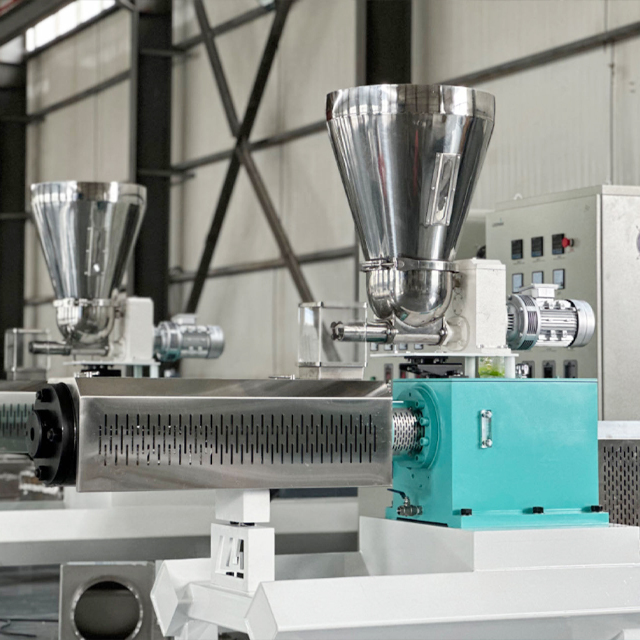
The LooMak LTE-65 is a compact twin-screw food extruder with a listed output of 80–100 kg/h. It is designed for developing puffed snacks, grain-based products, textured protein and extruded rice products.
Model: LTE-65
Listed Output: 80–100 kg/h
Screw Diameter: 65 mm
Application: Food extrusion and puffing
| Availability: | |
|---|---|
| Quantity: | |

LTE-65
LooMak
The LooMak LTE-65 is a compact twin-screw food extruder designed for small and medium-capacity food extrusion applications.
With a listed output of 80–100 kg/h and a 65 mm screw diameter, the LTE-65 can be configured for products such as direct-expanded snacks, grain-based foods, textured protein and extruded rice products.
The final configuration should be selected according to the raw material, formulation, target product, required texture, die shape and downstream production process.
| Specification | LTE-65 |
|---|---|
| Model | LTE-65 |
| Listed production capacity | 80–100 kg/h |
| Screw diameter | 65 mm |
| Temperature-control range | 0–200°C |
| Main drive power | 22 kW |
| Heating power | 8 kW |
| Listed auxiliary drive power | 0.75 kW |
| Machine dimensions | 3,125 × 1,069 × 1,891 mm |
| Machine weight | Approximately 1,800 kg |
The values above are the currently listed standard specifications. Actual output depends on the raw material, formulation, moisture, product density, die, cutting method and operating conditions. Electrical configuration and final machine specifications must be confirmed before ordering.
The LTE-65 uses two screws inside the extrusion barrel to continuously convey, mix, heat, cook and pressurize prepared food materials.
As the processed material moves through the barrel, controlled mechanical energy and heating change its physical properties. The material then passes through a die that determines the product profile.
For direct-expanded products, the pressure difference at the die can contribute to expansion. A cutting system controls the product length before the material moves to drying, frying, seasoning or another downstream stage.
Compared with using separate machines for every mixing and cooking step, twin-screw extrusion combines several processing functions inside one continuous system.
The LTE-65 can be evaluated for the following applications.
Corn, rice, wheat and other grain-based formulations can be processed into expanded snack products.
Depending on the formulation and die, potential shapes include:
Balls
Rings
Curls
Sticks
Shells
Stars
Customized profiles
The finished product normally requires drying, oil spraying, seasoning, cooling and packaging.
The LTE-65 can be considered for selected cereal and grain-based products where mixing, cooking and forming are completed through extrusion.
The final configuration depends on product density, expansion, texture and moisture requirements.
Selected soy- or plant-protein formulations may be processed through twin-screw extrusion to develop a textured structure.
Protein extrusion is highly dependent on formulation, moisture, temperature, screw configuration and downstream treatment. Product trials are recommended before the final configuration is confirmed.
Prepared flour and grain formulations may be extruded and shaped into rice-like products.
A complete process normally requires mixing, extrusion, shaping, drying, cooling and packaging. The target grain shape and cooking characteristics should be provided before equipment selection.
The listed 80–100 kg/h output makes the LTE-65 a potential option for manufacturers that do not require the capacity of a larger extrusion system.
Suitability should still be confirmed against the actual product because output can change significantly with formulation and product density.
Depending on the intended application, raw materials may include:
Corn flour
Rice flour
Wheat flour
Cereal blends
Corn starch
Potato starch
Tapioca starch
Soy-based ingredients
Selected plant-protein ingredients
Multigrain flour
Minor ingredients and functional powders
The raw material should be prepared to an appropriate particle size and mixed uniformly before feeding.
High levels of fat, fiber, sugar or protein can change extrusion performance. These formulations may require adjustments to feeding, moisture, temperature, screw configuration and die design.
The two-screw system supports continuous conveying, mixing, heat transfer and extrusion.
This makes the machine suitable for processing formulated food materials that require more controlled mixing than a basic forming process.
The listed machine dimensions are 3,125 × 1,069 × 1,891 mm.
Its compact configuration can be considered when planning a smaller production line, although additional space is required for feeding, cutting, electrical cabinets, access, maintenance and downstream equipment.
The main drive uses variable-frequency speed control, allowing operating speed to be adjusted according to the product and process.
Final settings must be developed for the specific raw material, moisture level and die.
The listed temperature-control range is 0–200°C.
Different barrel zones and setpoints may be required during product development. The actual processing temperature should be established according to the formulation and desired cooking or expansion result.
Different product profiles may be developed by changing the extrusion die.
Changing the die does not guarantee that every product can run under the same settings. The formulation, moisture, cutting method and downstream process may also need adjustment.
The LTE-65 can serve as the central processing machine in a line that includes mixing, feeding, cutting, drying, frying, seasoning, cooling and packaging equipment.
CTA: Ask About a Complete LTE-65 Production Line
A typical puffed snack process using the LTE-65 may include:
Raw-Material Preparation → Mixing → Feeding → Twin-Screw Extrusion → Cutting → Drying or Frying → Seasoning → Cooling → Packaging
Flours, starches and minor ingredients are prepared according to the formulation.
The ingredients and added moisture are mixed to create a more uniform feed material.
The prepared mixture is delivered continuously to the extruder. Stable feeding helps reduce variation in extrusion conditions.
The twin screws convey, mix, cook and pressurize the material before it passes through the product die.
The cutting system controls product length at the die.
The required downstream process depends on the target product. Direct-expanded snacks commonly require drying, while selected products may require frying.
Oil, liquid flavoring or dry seasoning can be applied according to the product.
The finished product is cooled before weighing and packaging.
Explore LooMak’s puffed snack production lines for downstream equipment options.
The LTE-65 product page describes the main extrusion machine. A working production line normally requires additional equipment.
The required equipment may include:
| Production Stage | Possible Equipment |
|---|---|
| Ingredient preparation | Powder mixer |
| Material transfer | Screw conveyor or feeder |
| Extrusion cooking | LTE-65 twin-screw extruder |
| Product forming | Die and cutter |
| Moisture reduction | Dryer |
| Fried-product processing | Continuous fryer |
| Flavor application | Oil sprayer and seasoning drum |
| Product stabilization | Cooling conveyor |
| Final packaging | Weighing and packing machine |
The final equipment list should be based on the intended finished product.
For example, a direct-expanded corn snack line and an instant rice line may both use extrusion, but their dies, downstream equipment and operating conditions will not be identical.
| Specification | LTE-65 | LTE-70 |
|---|---|---|
| Listed capacity | 80–100 kg/h | 200–240 kg/h |
| Screw diameter | 65 mm | 70 mm |
| Main drive power | 22 kW | 55 kW |
| Heating power | 8 kW | 14.4 kW |
| Listed machine weight | 1,800 kg | 3,200 kg |
The LTE-65 may be considered when the target output is lower or when a more compact extrusion machine is required.
The LTE-70 provides a higher listed output and larger drive system. Model selection should not be based on capacity alone. Raw material, formulation, product density, required expansion and downstream equipment must also be evaluated.
View the LTE-70 twin-screw extruder when comparing higher-capacity options.
Before requesting a final quotation, prepare the following information.
Provide the product name, photograph, sample or drawing.
List the main ingredients and approximate proportions when available.
State the required output in kilograms per hour. Clarify whether this refers to the extruded product or the final dried product.
Provide the required cross-section, diameter, length and appearance.
Confirm whether the product requires direct expansion, drying, frying, seasoning or another downstream process.
Provide:
Voltage
Frequency
Electrical phase
Available electrical capacity
Water supply
Compressed air
Gas supply, if required downstream
Provide the available installation length, width, ceiling height and preferred process direction.
State the target package weight, bag dimensions and required packaging speed if a complete line is needed.
The following items should be confirmed in the technical agreement:
Final equipment configuration
Guaranteed product-specific capacity
Applicable raw materials
Main motor and heating power
Voltage, frequency and phase
Temperature-control arrangement
Screw and barrel configuration
Die and cutter requirements
Product-contact materials
Machine dimensions
Electrical cabinet configuration
Included accessories and spare parts
Installation and commissioning scope
Required downstream equipment
Delivery documentation
Do not use a general catalogue value as a guaranteed output for every formulation. Product-specific performance should be confirmed during technical evaluation.
The currently listed capacity is 80–100 kg/h. Actual output depends on the raw material, formulation, moisture, product density, die and operating conditions.
The listed screw diameter is 65 mm.
The machine can be evaluated for puffed snacks, selected grain-based products, textured protein and extruded rice products. Suitability should be confirmed for the specific formulation and finished product.
Different shapes may be produced by changing the die and cutter. The formulation and operating parameters may also need to be adjusted.
Selected protein formulations may be suitable for twin-screw extrusion. Because protein texturization is process-sensitive, the formulation and target structure should be evaluated before confirming the machine configuration.
Not necessarily. The listed value refers to the extruder’s production reference. Final packaged output may differ after drying, frying, seasoning or moisture reduction.
The LTE-65 is the main extruder. Mixers, feeders, dryers, fryers, seasoning systems, cooling conveyors and packaging machines should be selected separately as part of the production line.
The final voltage, frequency and phase should be configured and confirmed according to the installation country and factory power supply.
Yes. A sample or clear product photograph, together with the raw-material information and required output, helps determine whether the LTE-65 is suitable.
Provide the target product, raw materials, required capacity, product shape, process route, voltage, factory layout, destination country and required downstream equipment.
The LTE-65 should be selected according to the product—not only according to the machine model.
Send LooMak your raw-material information, finished-product photograph or sample, required output and available utilities. The technical team can evaluate whether the LTE-65 is suitable and recommend the required feeding, drying, frying, seasoning, cooling and packaging equipment.


