Views: 0 Author: Site Editor Publish Time: 2026-09-28 Origin: Site
The production of infant cereal operates under the most stringent regulatory and quality standards in the food manufacturing sector. Precise control over digestibility, hygiene, and nutritional integrity remains non-negotiable for plant operators. Legacy processing methods, such as drum drying or single-screw extrusion, consistently struggle to balance high throughput demands with strict thermodynamic control. These older systems often cause the degradation of heat-sensitive vitamins and proteins during processing. Selecting the right infant cereal extruder represents a major capital expenditure that dictates plant efficiency for decades. This technical guide examines why Twin-Screw Extrusion has become the baseline standard for modern production lines. We provide a field-tested framework for evaluating equipment based on sanitary design, modular scalability, and thermodynamic performance. Plant engineers and production managers can use these parameters to optimize extrusion processes, meet global food safety mandates, and maximize yield without compromising product quality.
Historically, plant operators relied heavily on drum drying to produce precooked infant cereals. This legacy method involves applying a liquid slurry to large, steam-heated rotating cylinders. The water evaporates, and scraper blades remove the dried flakes off the drum surface. This process presents severe limitations on modern factory floors. It consumes massive amounts of energy to generate the required steam. The equipment demands a massive factory footprint to achieve meaningful throughput. Recipe flexibility remains extremely limited because operators cannot easily adjust the shear or cooking profile on the fly.
Extrusion cooking offers a continuous, highly efficient alternative. It combines mixing, cooking, shearing, and shaping into a single unit operation. This streamlines the entire factory floor. Raw flours enter the barrel, undergo intense thermo-mechanical processing, and exit as fully cooked, expanded matrices. The transition to extrusion drastically reduces energy consumption per ton of product. It also provides operators with precise control over the final product's physical properties.
| Parameter | Drum Drying | Twin-Screw Extrusion |
|---|---|---|
| Energy Efficiency | Low (High steam demand) | High (Mechanical shear + targeted heating) |
| Footprint | Large (Requires massive drums) | Compact (High throughput per square meter) |
| Recipe Flexibility | Poor (Fixed thermal transfer) | Excellent (Adjustable screw profiles and SME) |
| Sanitation | Open system, higher exposure risk | Closed barrel, automated CIP integration |
Infants have developing digestive systems. They require fully broken-down starches for proper nutrient absorption. The extruder must apply precise shear and temperature profiles to achieve complete starch gelatinization. If the starches remain raw, the infant cannot digest the cereal properly. This leads to severe gastrointestinal discomfort.
The final powder must reconstitute instantly in milk or water. It cannot clump or separate in the bowl. Achieving the correct bulk density is essential. You must carefully control the Water Absorption Index (WAI) and Water Solubility Index (WSI). WAI determines how thick the porridge becomes. WSI dictates the smoothness of the final mixture.
High heat destroys fortified vitamins, minerals, and amino acids. We must minimize residence time at peak temperatures inside the barrel. The extrusion process also acts as a lethality step. It kills harmful pathogens like Salmonella. We must control moisture flash-off at the die to maintain safe water activity (Aw) levels. A low Aw prevents microbial growth during shelf life.
Single-screw extruders rely entirely on friction against the barrel wall for conveying material. This causes inconsistent flow, especially with sticky or high-moisture recipes. Twin-screw systems utilize positive displacement. The intermeshing screws push material forward mechanically. They maintain a consistent flow rate regardless of ingredient viscosity or moisture content.
You can decouple screw speed from throughput in twin-screw systems. This provides a massive operational advantage. It allows precise manipulation of the Specific Mechanical Energy (SME). SME measures exactly how much mechanical work goes into the infant cereal matrix. By adjusting the screw speed independently of the feed rate, operators can fine-tune the cooking process. You achieve perfect gelatinization without overheating the product.
The intermeshing action of twin-screw profiles provides intense macro-mixing and micro-mixing. Ingredients blend perfectly at a molecular level. Distributive mixing ensures uniform distribution of moisture and heat. Dispersive mixing breaks down lumps and agglomerates. This guarantees a perfectly smooth texture in the final infant cereal.
Infant formulas often contain diverse grain bases, fats, and liquid slurries. Single screws tend to surge or block under these complex conditions. The friction drops, and the material stops moving. Twin screws handle complex recipes smoothly. They process high-fat or high-sugar formulations without skipping a beat. This flexibility allows facilities to run multiple product lines on the same machine.
Co-rotating, fully intermeshing twin screws are inherently self-cleaning. The flight of one screw constantly wipes the root of the other screw. The clearance between the metal surfaces is incredibly tight, often less than a millimeter. This prevents any material from sticking to the screws during production.
This self-wiping action prevents localized burning inside the barrel. You eliminate the risk of black specks appearing in the final product. It also removes dead zones where unmixed material could stagnate. Stagnant zones allow bacteria to proliferate. Eliminating these dead zones is a strict requirement for infant food safety.
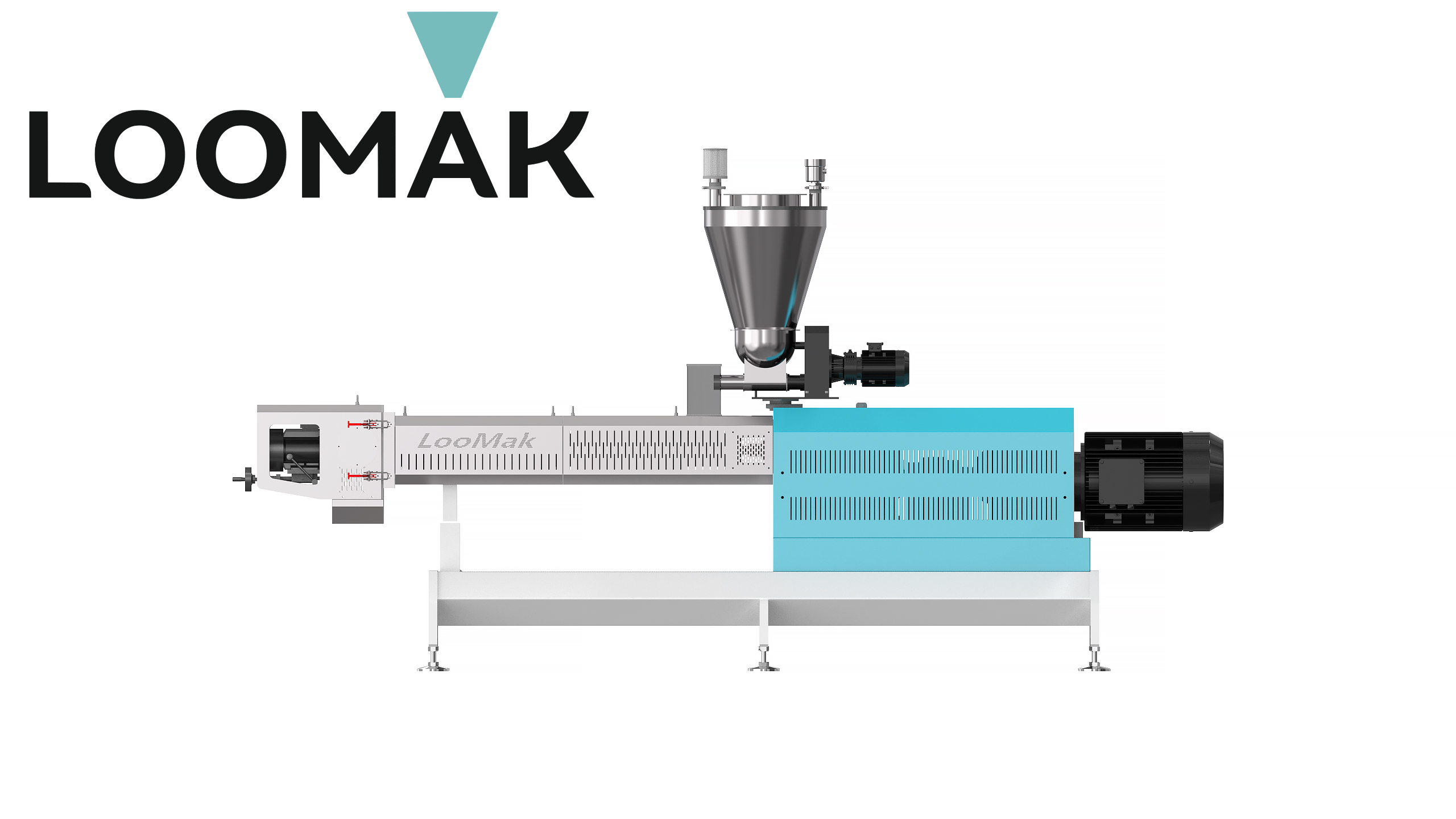
A high-capacity pre-conditioner is mandatory for infant cereal extrusion. It sits above the extruder barrel and mixes raw dry ingredients with steam and water. This pre-hydrates and partially gelatinizes the starches before they even enter the main extruder. The residence time inside the pre-conditioner usually ranges from one to three minutes.
The pre-conditioner utilizes a twin-shaft design with adjustable paddles. Operators can change the paddle pitch to increase or decrease the retention time. Steam is injected at specific pressures, usually between 2 to 4 bar, to ensure rapid heat transfer. Water is atomized through spray nozzles to prevent lump formation. This controlled environment raises the moisture content of the raw mix to 20-30% and the temperature to 70-90°C before it drops into the extruder feed port.
Advanced pre-conditioning increases overall throughput significantly. It does the heavy lifting of heating and hydrating the flour. This reduces mechanical wear on the extruder screws and barrel liners. The final product gains a better flavor profile. It also achieves superior digestibility because the starches have more time to absorb moisture and swell properly.
Evaluate the extruder’s physical architecture carefully. Look for crevice-free surfaces and hygienic welds throughout the entire machine. Standard industrial designs are not acceptable for infant food. Quick-release mechanisms for barrel opening are essential. Operators must be able to inspect the internal components quickly and safely.
Assess the integration of automated CIP and SIP (Sterilize-in-Place) protocols. These systems pump cleaning chemicals and sterilizing steam through the barrel automatically. They minimize manual intervention. This drastically reduces turnaround time between batches. Automated cleaning also removes human error, ensuring consistent sanitation standards are met every single time.
Metal contamination in infant food is a catastrophic risk. Standard stainless steel often wears down quickly when processing abrasive grains like rice or corn. The friction generated inside the barrel acts like sandpaper on the metal components. If the metal wears down, microscopic shavings can enter the food stream.
When evaluating metallurgy, engineers look at the Rockwell Hardness (HRC) rating. Standard stainless steel might offer an HRC of 20-30, which degrades rapidly under high shear. Advanced PM tool steels achieve HRC ratings of 60 or higher. You must also consider corrosive wear. Infant formulas often contain acidic vitamin premixes or high salt contents. Bimetallic barrel liners with a corrosion-resistant inner layer provide the best defense against this chemical attack.
Compare standard metals against advanced alloys and surface treatments. Powder Metallurgy (PM) steels offer exceptional durability. Nitriding and specialized surface coatings provide high wear resistance. These advanced materials maintain strict food-grade compliance over long production runs. They protect the product and extend the lifespan of your equipment.
Gravimetric feeders are strictly required to ensure exact ratios of dry macro-ingredients and micro-nutrients. Loss-in-Weight (LIW) feeders adjust the screw speed continuously based on real-time load cell data. This maintains feeding accuracy within fractions of a percent. Volumetric feeding is simply not accurate enough for fortified infant formulas.
Evaluate the design of liquid injection ports along the barrel. You need to add water, oils, or vitamin slurries directly into the optimal processing zones. Injecting heat-sensitive vitamins near the end of the barrel minimizes their exposure to high temperatures. This preserves the nutritional integrity of the final cereal.
Die plate configurations must be optimized for maximum moisture flash-off. As the cooked dough exits the die, it moves from a high-pressure environment to atmospheric pressure. The superheated water instantly flashes into steam. This causes the product to expand rapidly. The die design dictates the shape and internal structure of this expanded matrix.
The open area of the die plate determines the backpressure inside the barrel. Engineers calculate the exact number and diameter of the die holes based on the target throughput and expansion ratio. If the open area is too large, pressure drops, and the cereal will not expand. If it is too small, pressure spikes, risking motor overload. The cutter blade angle and speed also play a vital role. Blades must sit flush against the die face to ensure clean cuts without smearing the extrudate.
The die and cutting mechanism prepare the extrudate for downstream processing. High-speed rotary knives slice the expanding dough into uniform pellets or flakes. Efficient cutting leads to better drying downstream. It ensures the product mills easily into a fine, uniform powder that reconstitutes perfectly for the end consumer.
Modern PLC and HMI platforms are absolutely necessary. They offer real-time monitoring of critical process parameters. Operators must track temperature, pressure, torque, and SME constantly. Advanced PID loops adjust heating and cooling automatically to maintain strict temperature profiles across different barrel zones.
| Control Feature | Basic PLC | Advanced SCADA Integration |
|---|---|---|
| Data Logging | Manual exports via USB | Automated cloud or local server storage (CFR 21 Part 11 compliant) |
| Recipe Management | Limited local storage | Unlimited centralized database with version control |
| Alarm Handling | Basic visual/audio alerts | Predictive maintenance alerts and automated shutdown sequences |
| Traceability | Batch level only | Second-by-second parameter tracking tied to specific barcodes |
Data logging capabilities are required for FDA and FSMA compliance. You need complete batch traceability from raw ingredients to finished powder. The control system should enable automated out-of-spec material diversion. If the temperature drops below the lethality threshold, the system must automatically divert that product to waste.
Size your extruder based on current demand and realistic future growth projections. Consider the L/D (Length to Diameter) ratios carefully. A longer barrel provides more residence time for complex cooking profiles. Motor sizing dictates your maximum throughput capability. Do not undersize the motor, as infant cereals often require high torque to process dense, viscous doughs.
Twin-screw extrusion lines offer excellent spatial efficiency. They take up a fraction of the floor space compared to legacy drum drying systems. A modern extruder can produce thousands of kilograms per hour within a highly compact footprint. This allows facilities to maximize their production output per square meter of factory space.
Modern direct-drive motors provide excellent energy efficiency. They eliminate the power losses associated with older belt-driven systems. Advanced barrel heating and cooling systems minimize wasted power. They use precise fluid circulation to add or remove heat exactly where it is needed along the barrel.
Factor in the lifespan of wear parts like screw elements and barrel liners. Your maintenance team should be able to replace them easily. Look for split-barrel designs that open quickly. Your staff should not require specialized OEM technicians on-site just to swap out a worn kneading block. Easy maintenance keeps your line running efficiently.
Evaluate the OEM's ability to provide rapid replacement of high-wear parts. Extruder components will eventually wear out. You need a vendor with a robust global supply chain. Remote PLC troubleshooting is a massive advantage. Engineers can log into your system remotely to diagnose faults and adjust parameters without traveling to your site.
Guaranteed Service Level Agreements (SLAs) for spare parts keep your line running. They minimize costly production downtime. If a main drive shaft fails, you need a replacement shipped immediately. Ensure your vendor commits to strict delivery timelines for critical components in writing.
Segmented screws and modular barrels offer immense operational value. You can swap individual screw elements rather than replacing entire solid shafts. You can mix and match conveying elements, kneading blocks, and reverse elements to create the perfect shear profile for any recipe.
This allows manufacturers to reconfigure the machine easily. You can produce toddler snacks, textured proteins, or standard breakfast cereals if business objectives shift. A modular extruder adapts to market trends. It prevents your equipment from becoming obsolete when consumer preferences change.
Twin-screw extrusion is a complex thermo-mechanical process. Operator error can lead to massive product loss or severe equipment damage. If an operator feeds dry flour without adequate water, the friction will spike. This can seize the screws and destroy the main drive motor in seconds.
Mandate comprehensive OEM training programs for all shift operators. Establish clear Standard Operating Procedures (SOPs) for startup, shutdown, and cleaning. Utilize extruders with recipe-driven automation. This allows operators to load pre-set parameters with a single button press. It drastically reduces reliance on operator intuition and minimizes human error.
Bottlenecks often occur due to mismatched capacities across the production line. The extruder must align perfectly with milling and mixing equipment upstream. It must also match the capacity of drying, milling, and packaging systems downstream. If the dryer cannot handle the extruder's output, you will have to slow down the entire line.
Conduct full-line engineering audits prior to purchase. Ensure seamless control system handshakes across all unit operations. Use SCADA integration to link the extruder's PLC with the rest of the factory. If a downstream mill trips and stops, the SCADA system should automatically pause the extruder feed to prevent material pileups.
Extended downtime during installation is a major financial risk. Failing to meet strict infant food validation protocols will delay your product launch. Installation Qualification (IQ), Operational Qualification (OQ), and Performance Qualification (PQ) require rigorous testing and documentation.
Define clear Factory Acceptance Testing (FAT) and Site Acceptance Testing (SAT) criteria early in the project. Focus specifically on infant cereal parameters before finalizing the capital expenditure approval. Run actual product formulations during the FAT. Verify that the machine achieves the required starch gelatinization and microbial lethality before it ever leaves the vendor's facility.
A: The ideal L/D ratio typically ranges between 16:1 and 24:1. This length provides adequate residence time for thorough mixing, cooking, and starch gelatinization without causing excessive thermal degradation to heat-sensitive nutrients.
A: A pre-conditioner pre-hydrates and partially cooks the raw flour blend using steam and water. This increases overall throughput, reduces mechanical wear on the extruder barrel, and improves the final digestibility of the cereal.
A: It applies precise mechanical shear and thermal energy to break down complex starch molecules. This complete gelatinization process makes the carbohydrates easily digestible for infants with developing gastrointestinal systems.
A: Yes. Modular twin-screw extruders allow operators to change the screw profile and die head. This flexibility lets a single machine switch between dense infant powders and expanded breakfast cereals easily.
A: Equipment must feature crevice-free stainless steel construction, self-draining surfaces, and hygienic welds. Automated Clean-in-Place (CIP) systems and self-wiping screw designs are mandatory to prevent microbial growth and cross-contamination.
A: Operators prevent degradation by minimizing the residence time at peak temperatures. Additionally, heat-sensitive vitamins can be injected as a liquid slurry near the end of the extruder barrel to limit thermal exposure.
A: The tight clearance between co-rotating screws ensures they constantly wipe each other clean. This prevents material buildup, eliminates dead zones where bacteria can grow, and stops localized burning that causes black specks.


