Views: 0 Author: Site Editor Publish Time: 2026-09-28 Origin: Site
The global mandate for food fortification and the economic incentive to upcycle broken rice have transformed nutritional rice production into a high-demand industrial operation. Transitioning from concept to commercial-scale manufacturing requires navigating strict compliance standards for nutrient retention. Plant operators must manage the thermal dynamics of extrusion carefully. Avoiding capital misallocation on incompatible machinery prevents long-term operational failures. We evaluate the end-to-end manufacturing lifecycle, detailing raw material specifications, process engineering, and equipment selection frameworks. These parameters help de-risk facility investments and ensure consistent output quality across every production run.
Establishing baseline metrics for commercial viability prevents wasted trial runs. Manufacturers often procure equipment without defining acceptable finished product specifications. You must frame the production parameters around the end-user experience and strict regulatory guidelines. A successful fortified rice kernel (FRK) seamlessly blends into natural rice supplies. Consumers reject batches showing obvious differences in appearance, texture, or cooking time.
Achieving a final product mimicking natural milled rice requires precise die engineering. You must replicate the exact shape, color, and bulk density of the target regional rice variety. Hydration rate serves as the primary quality indicator. If the artificial kernel absorbs water faster than natural rice, it degrades into a mushy paste during boiling. A slower hydration rate leaves the fortified kernel hard and unpalatable. Extrusion die design and starch gelatinization parameters directly control these physical characteristics. Operators calibrate equipment to match the specific cooking behavior of the local staple crop.
| Quality Parameter | Target Specification | Testing Method |
|---|---|---|
| Bulk Density | 0.78 - 0.85 g/cm³ | Volumetric displacement |
| Moisture Content | 11.0% - 12.0% | Halogen moisture analyzer |
| Length to Width Ratio | Matches local variety (e.g., 3:1 for long grain) | Digital caliper measurement |
| Hydration Time | 15 - 20 minutes at 100°C | Standardized boiling test |
| Color Profile | Translucent white to slightly off-white | Spectrophotometer (L*a*b* values) |
Uniform distribution of micronutrients per batch prevents toxic overages and ineffective under-dosing. Every single kernel must carry a consistent payload of vitamins and minerals. The mixing phase targets a Coefficient of Variation (CV) below 10%. You also need to maintain shelf-life stability under standard storage conditions. High humidity and fluctuating temperatures degrade sensitive compounds like Vitamin A. Microencapsulation techniques protect these nutrients within the starch matrix. Proper drying protocols lock the nutrients inside, preventing oxidation and moisture-induced spoilage during transit and warehousing.
Meeting regional food safety and fortification mandates dictates market access. Organizations like the World Health Organization (WHO) provide strict guidelines for fortified rice formulations. You validate production outputs against these international standards. Local governments mandate specific inclusion rates for iron, zinc, and folic acid. Facilities implement robust testing protocols to prove compliance. Failing to meet these regulatory benchmarks results in product recalls and severe reputational damage.
The foundation of high-quality output relies on raw material integrity. You cannot engineer a premium product from heavily contaminated or degraded inputs. Upcycling broken rice offers excellent economic advantages, but demands rigorous quality control. The agricultural origins of the rice directly impact the extrusion process and the final nutritional profile.
Cultivation methods directly alter the baseline nutrient profile. Techniques like the System of Rice Intensification (SRI) or alternating wet and dry methods change the crop's composition. These practices boost plant health and alter the natural nutrient payload. Post-harvest handling dictates the microbial load of the incoming broken rice. Sourcing from supply chains strictly following Good Agricultural Practices (GAP) minimizes mycotoxin risks. A cleaner baseline matrix reduces the need for aggressive thermal sterilization during processing.
The starch profile of the broken rice dictates extruder behavior. The ratio of amylose to amylopectin determines how the flour binds. High amylose rice creates firmer kernels holding their shape well during cooking. High amylopectin rice yields a stickier product prone to clumping at the die face. Operators adjust extrusion parameters based on this specific starch ratio. Optimal particle size for the milled flour ranges between 60 and 80 mesh. Hammer mills equipped with appropriate screens ensure this precise milling, facilitating smooth extrusion and homogenous mixing with micronutrient powders.
Adjusting premix formulations based on the natural nutrient retention of the sourced crop optimizes the recipe. You select highly bioavailable forms of iron, zinc, folic acid, and vitamins. Ferric pyrophosphate serves as a common choice for iron because it minimizes color changes in the final kernel. Its bioavailability requires careful balancing. You calculate thermal overage accurately. Extrusion involves heat and shear, degrading sensitive vitamins. Balancing premix ratios to account for this thermal degradation ensures the final product meets label claims.
| Micronutrient | Extrusion Degradation Risk | Recommended Thermal Overage |
|---|---|---|
| Vitamin A (Retinol) | High (Heat and oxidation sensitive) | 30% - 40% |
| Vitamin B1 (Thiamine) | Moderate (Heat sensitive) | 15% - 25% |
| Folic Acid | Moderate | 10% - 20% |
| Iron (Ferric Pyrophosphate) | Low (Highly stable) | 2% - 5% |
| Zinc (Zinc Oxide) | Low (Highly stable) | 2% - 5% |
Food-grade emulsifiers and binders maintain kernel structure. Ingredients like sodium alginate, guar gum, or specific monoglycerides help the artificial grain withstand boiling water. They create a protective network around the gelatinized starch. Typical inclusion rates range from 0.5% to 1.5% of the total dry mix. Pre-conditioning parameters activate these binders. You achieve an optimal moisture content, typically between 28% and 32%, prior to extrusion. Injecting steam at 2-3 bar pressure into the pre-conditioner hydrates the flour evenly over a 2-3 minute retention time. This step reduces the mechanical energy required inside the extruder and improves overall throughput.
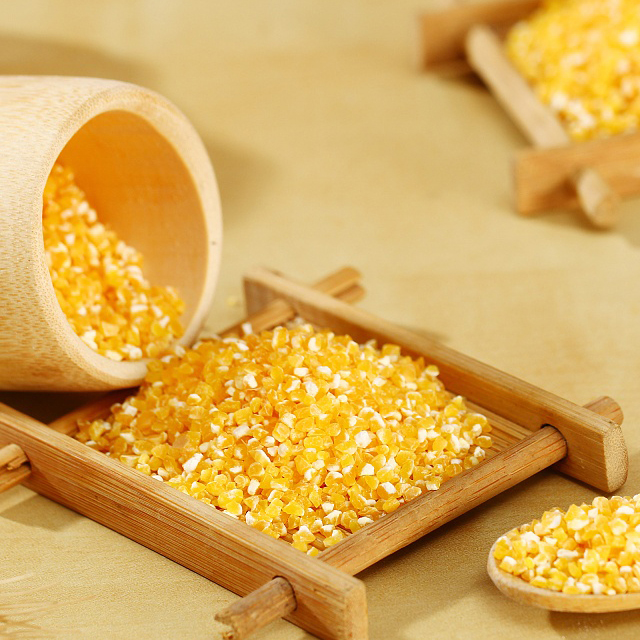
Transforming fortified flour into stable, rice-like kernels requires mastering thermal and mechanical energy. The core manufacturing process demands precise synchronization across multiple equipment stages. Any deviation in mixing, forming, or drying compromises the final product quality.
Evaluating batch versus continuous mixing systems determines facility operational efficiency. Batch mixers offer high precision for smaller runs and complex formulations. Continuous mixers provide superior throughput for large-scale industrial operations. Uniform dispersion of micro-ingredients into the macro-matrix remains mandatory. A poorly mixed batch results in kernels with inconsistent nutrient profiles. High-speed ribbon blenders or plowshare mixers effectively distribute the dense vitamin powders evenly throughout the lighter rice flour. Mixing times typically range from 5 to 8 minutes per batch to achieve the required homogeneity.
Operators weigh the trade-offs between cold and hot extrusion methods. Low-temperature extrusion prioritizes nutrient retention by keeping barrel temperatures below 80°C. This method minimizes starch gelatinization, requiring stronger binders to hold the kernel together. High-temperature/short-time (HTST) extrusion offers higher throughput and complete starch gelatinization. HTST risks severe vitamin degradation without proper microencapsulation. Modern facilities utilize a hybrid approach, carefully zoning the extruder barrel temperatures.
A typical 5-zone extruder profile for nutritional rice runs as follows: Zone 1 (Feeding) at 30°C, Zone 2 (Mixing) at 50°C, Zone 3 (Cooking) at 80°C, Zone 4 (Cooking) at 90°C, and Zone 5 (Forming/Die) cooled back down to 70°C. This profile ensures adequate gelatinization while protecting the vitamins just before the die exit.
Die design and cutting mechanisms dictate the physical appearance of the product. Achieving exact dimensional replication of natural rice grains requires precision-machined dies, often utilizing Teflon inserts to ensure a smooth surface finish. The cutting blade slices the extrudate cleanly without causing tailing or deformation. You synchronize the cutter speed with the extruder output rate. A mismatched speed results in kernels being too long or too short. Regular maintenance of the die face prevents pressure buildup and ensures consistent product shaping.
The critical path involves reducing moisture from approximately 30% down to safe storage levels below 12%. Managing drying curves prevents surface cracking or case hardening. Drying the kernels too quickly hardens the exterior while the interior remains wet. This trapped moisture eventually causes the kernel to shatter. Facilities utilize multi-pass belt dryers applying gentle, gradual heat. A typical 5-pass dryer utilizes a descending temperature gradient: 90°C in the top pass, dropping to 70°C in the middle passes, and finishing at 50°C. This controlled moisture reduction prevents the structural collapse of the kernel and ensures long-term shelf stability.
Ambient cooling processes stabilize the starch matrix immediately after drying. Forcing cold air through the product bed in a fluidized bed cooler stops any residual cooking effects and brings the product down to room temperature. Optional polishing steps improve the surface sheen, making the artificial kernels look more like polished white rice. Grading screens remove fines, dust, and agglomerated clusters from the final batch. This separation step ensures only perfectly formed kernels reach the packaging line, maintaining a premium product appearance.
Selecting the right machinery dictates operational efficiency and product quality. Capital expenditure decisions align with specific formulation requirements. Procurement errors at this stage lead to chronic production bottlenecks and high waste rates.
The choice between single-screw and twin-screw technology represents the most critical equipment decision. Single-screw extruders offer lower initial costs and simpler maintenance. They suffer from poor mixing capabilities and inconsistent pressure generation. They rely heavily on the friction between the screw and the barrel, increasing the risk of nutrient degradation through uneven heating.
Twin-screw extruders provide indispensable advantages. Co-rotating, fully intermeshing screws feature self-wiping mechanisms preventing material buildup and burning. They offer precise shear control, superior mixing, and highly consistent output regardless of raw material variations. A Length to Diameter (L/D) ratio between 28:1 and 32:1 provides the optimal residence time for cooking and forming rice kernels. For nutritional rice, twin-screw technology remains the definitive recommendation.
| Feature | Single-Screw Extruder | Twin-Screw Extruder |
|---|---|---|
| Mixing Capability | Poor to Moderate | Excellent (Homogenous) |
| Pressure Consistency | Variable (Relies on friction) | Highly Stable (Positive displacement) |
| Nutrient Degradation Risk | High (Uneven heating) | Low (Precise temperature zoning) |
| Self-Cleaning Function | No | Yes (Self-wiping profile) |
| Ingredient Flexibility | Low (Requires strict moisture limits) | High (Handles varied moisture/fat levels) |
Evaluating multi-layer mesh belt dryers versus rotary systems impacts final yield. Belt dryers provide gentle, uniform moisture removal. The kernels rest on a moving stainless steel mesh, preventing mechanical damage during the drying cycle. Rotary dryers tumble the product aggressively. This tumbling action causes fragile rice kernels to chip or break, increasing waste. Evaluating energy sources impacts operational expenditure. Steam, gas, or electric heating options dictate running costs. Selecting energy-efficient systems minimizes overhead and aligns the facility with environmentally friendly manufacturing standards.
Assessing the modularity of the production line offers significant strategic advantages. Smart procurement maximizes asset utilization. You integrate nutritional rice manufacturing with a Puffed snack Production Line by swapping extrusion dies and adjusting screw configurations. This flexibility lets operators pivot between different product categories based on market demand. A modular twin-screw setup handles both high-shear puffing and low-shear forming. Operators reconfigure the barrel profile by removing high-shear kneading blocks and installing conveying elements, then adjust the downstream drying parameters to switch production modes.
Scaling up production introduces several operational risks. Identifying these failure points early allows engineers to build robust mitigation strategies. Proactive risk management prevents costly downtime and ensures consistent product quality.
Incoming broken rice exhibits significant starch inconsistencies and varying microbial loads. These fluctuations destabilize the extrusion process.
Excessive heat and shear inside the extruder barrel destroy sensitive vitamins, rendering the fortification process useless.
Bacterial buildup in equipment dead zones poses a severe food safety risk, leading to widespread product recalls.
| Defect Observed | Probable Cause | Corrective Action |
|---|---|---|
| Surging at the die face | Inconsistent feed rate or moisture variation | Calibrate volumetric feeder; check pre-conditioner steam pressure. |
| Kernel cracking post-dryer | Drying temperature too high in initial pass | Reduce Zone 1 dryer temperature; increase belt speed slightly. |
| Sticky extrudate clumping | Excessive moisture or low barrel temperature | Reduce water injection in pre-conditioner; increase Zone 3/4 heat. |
| Dark discoloration | Excessive shear or residence time | Increase screw speed to reduce residence time; check for worn screw elements. |
Successful nutritional rice production relies on the precise control of thermal and mechanical energy during extrusion and drying. Operators pair this technical control with high-quality, sustainably sourced raw materials. Compromising on the core extruder technology leads to high rejection rates and severe nutrient loss. Opting for single-screw machinery creates a false economy in this highly regulated sector. Prioritize equipment vendors offering twin-screw technology and demonstrating proven die designs for accurate rice shaping. Demand comprehensive Factory Acceptance Testing (FAT) utilizing specific raw material formulations before finalizing any purchase.
To move forward effectively, execute the following steps:
A: A co-rotating twin-screw extruder is the industry standard. It provides the necessary shear control, homogenous mixing, and temperature regulation required to form stable kernels without destroying heat-sensitive vitamins. Single-screw machines lack the precision needed for this application.
A: Yes, with modifications. While the core twin-screw extruder can be shared, producing nutritional rice requires specific rice-shaped dies, different screw profiles designed for forming rather than puffing, and specialized low-temperature drying equipment to prevent kernel cracking.
A: The baseline quality of broken rice is heavily influenced by cultivation and post-harvest practices. Rice grown using sustainable methods and processed under Good Agricultural Practices (GAP) provides a cleaner, more consistent starch matrix, reducing the need for drastic formulation adjustments during extrusion.
A: Vitamins are protected by using microencapsulated premixes, calculating thermal overages into the initial recipe, and utilizing low-temperature extrusion parameters. Operators typically keep barrel temperatures below 80-90°C in the final forming zones to prevent degradation.
A: The primary raw material is broken rice milled into fine flour, typically between 60 and 80 mesh. This flour is blended with water, a specialized micronutrient premix containing iron, zinc, and vitamins, alongside food-grade binders to maintain kernel integrity during cooking.
A: The finished product must be dried to a moisture content of 11% to 12%. This specific moisture level ensures microbiological stability and provides a shelf life comparable to natural milled rice under standard storage conditions.
A: Breakage is prevented by using multi-pass, low-temperature belt dryers that remove moisture gradually. Rapid drying causes case hardening and internal steam pressure, leading to cracked kernels. Gentle drying curves ensure the structural integrity of the starch matrix remains intact.


