Views: 0 Author: Site Editor Publish Time: 2026-09-28 Origin: Site
The commercial demand for ready-to-eat and instant traditional foods is accelerating, but replicating the complex viscosity and mouthfeel of slow-cooked rice porridge presents significant manufacturing challenges. Traditional manufacturing methods like drum drying or conventional puffing often result in poor rehydration rates, clumping, nutrient degradation, or a starchy, unnatural texture. Furthermore, manufacturers struggle to balance commercial throughput with the sensory authenticity of whole grains.
High-Temperature Short-Time (HTST) extrusion technology offers a highly controllable alternative. By manipulating thermal and mechanical energy, an industrial extruder can restructure rice starch at the molecular level, enabling rapid rehydration while preserving texture. This guide evaluates the equipment, process parameters, and operational trade-offs required to successfully implement instant rice porridge production, including advanced techniques for reforming flour into precooked, rice-like particulates.
Establishing baseline metrics dictates product viability on the factory floor and in the competitive food market. You cannot manage what you do not measure. Instant porridge must mimic the slow-cooked original while requiring minimal preparation time from the end user. Manufacturers must define strict parameters for rehydration speed, viscosity, and nutritional retention before configuring the processing line. Missing these targets results in rejected batches, wasted raw materials, and damaged brand reputation. Plant managers need quantifiable data points to ensure continuous production lines yield consistent output shift after shift.
Consumers expect instant porridge to be ready quickly. Targeting a rehydration time of under three to five minutes using hot water is the industry standard. This speed depends entirely on the physical structure of the processed grain. If the cellular structure is too dense, the hot water cannot penetrate the core, leaving hard, unpalatable centers.
Extrusion parameters directly influence the porosity of the final powder, flake, or reformed grain. High porosity maximizes water ingress. Engineers measure this capability using the Water Absorption Index (WAI). A higher WAI indicates that the starch matrix can absorb water rapidly without requiring prolonged boiling. You must calibrate barrel temperatures and screw speeds to create micro-fissures in the extrudate. Quality control teams typically run centrifuge tests on the factory floor to measure WAI, ensuring the starch matrix has been sufficiently expanded to allow boiling water to penetrate the core of the particle instantly.
Texture defines the consumer experience. Low-quality instant powders often yield a gluey, excessively uniform paste that feels artificial. Authentic congee features a specific suspension of soft rice solids within a viscous liquid. Replicating this requires precise manipulation of the starch molecules.
You must balance soluble and insoluble starches to control the rheology of the hydrated product. Extrusion alters the fluid flow characteristics by breaking down long-chain amylopectin molecules. Proper shear control prevents the complete destruction of the starch granule. Maintaining a percentage of intact, gelatinized starch ensures the final product mimics the natural suspension of rice solids rather than forming a homogeneous, wallpaper-paste consistency. Technicians often use a Bostwick consistometer to measure the flow rate of the hydrated porridge, adjusting the specific mechanical energy (SME) at the extruder to dial in the exact viscosity required.
Leveraging the HTST nature of extrusion minimizes vitamin and amino acid degradation. The process exposes the raw materials to high heat for only a few seconds, preserving heat-sensitive nutrients far better than prolonged batch cooking or traditional drum drying methods. This rapid thermal cycle protects the natural profile of the grain.
Complete gelatinization during extrusion also increases starch digestibility, making the porridge easier to process for infants or elderly consumers. Furthermore, modern formulations rarely rely on white rice alone. You can incorporate pulses, legumes, or other pretreated cereals to improve the nutritional profile. Adding pea protein isolate, lentil flour, or oat bran increases protein and fiber content. The extrusion process seamlessly binds these diverse ingredients into a uniform matrix, transforming a simple carbohydrate dish into a balanced, ready-to-eat meal without gritty textures or phase separation.
Understanding how thermal and mechanical energy transform raw rice flour is fundamental to process design. Extrusion is a continuous, high-pressure biochemical reactor. The equipment applies specific mechanical energy and thermal energy to restructure mixed-grain formulations into highly functional food bases. Operators must balance these two energy inputs to achieve the desired phase transition from raw powder to a fluid melt.
The extruder barrel acts as the primary cooking vessel. It applies rapid heat, typically ranging from 120°C to 180°C, for a duration of just 10 to 30 seconds. This intense, brief exposure achieves multiple objectives simultaneously without degrading the base material.
First, it cooks the starch, transitioning it from a crystalline state to an amorphous state. Second, the extreme environment significantly reduces the microbial load of the raw flour, acting as a highly effective kill step for pathogens like Salmonella or E. coli. Finally, it inactivates enzymes that cause rancidity, such as lipases found in rice bran. This enzymatic inactivation dramatically extends the shelf life of the final packaged powder, preventing off-flavors during months of ambient storage.
The core transformation occurs at the molecular level. In the presence of water and heat, the extruder breaks down the intermolecular bonds of starch molecules. This process, known as gelatinization, makes the starch digestible and soluble. The degree of gelatinization directly correlates with the final product's ability to form a smooth paste.
Simultaneously, intense shear forces restructure the starch paste. As the material exits the die plate, the sudden drop in pressure causes internal moisture to flash off as steam. This rapid evaporation expands the starch matrix into irregular chunks or flakes. This expansion permanently alters the density and fluid flow characteristics of the material. The resulting porous structure is what allows for instant reconstitution when the consumer adds hot water. Operators control this expansion ratio by adjusting the moisture content in the pre-conditioner and the temperature in the final barrel zone.
| Starch Property | Raw Rice Flour | Extruded Rice Matrix |
|---|---|---|
| Crystalline Structure | Intact, highly ordered | Disrupted, amorphous |
| Water Solubility Index (WSI) | Low (<5%) | High (15% - 40%) |
| Digestibility | Poor (requires boiling) | Excellent (pre-cooked) |
| Enzymatic Activity | Active (prone to rancidity) | Inactivated (shelf-stable) |
| Bulk Density | High (compact powder) | Low (porous, expanded) |
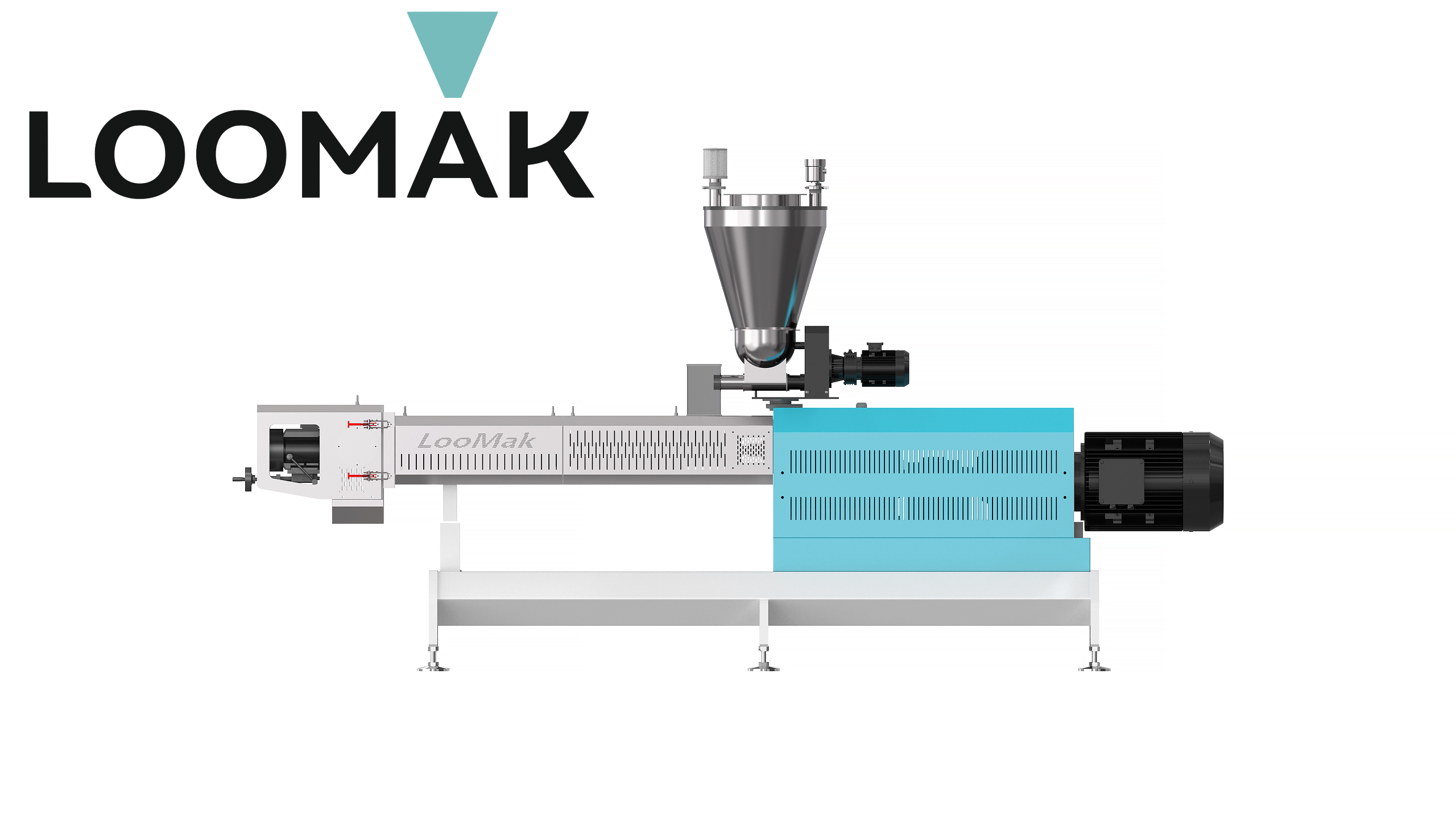
Selecting the right machinery dictates your operational capabilities. Comparing equipment architectures ensures you invest in hardware suited for your specific formulation requirements. You must evaluate machines based on their ability to handle varying moisture levels, ingredient complexities, and continuous production demands without frequent downtime for cleaning or unclogging.
The choice of Extruder architecture fundamentally impacts product quality and operational flexibility on the factory floor.
Single-screw machines require lower initial capital. However, they are highly sensitive to moisture variations and rely entirely on friction for conveying material forward. They struggle with inconsistent mixing, especially when processing fortified formulations containing high protein or fiber. Slip can occur inside the barrel, leading to uneven cooking, surging at the die, and inconsistent product density. Operators often spend hours adjusting parameters just to maintain a stable flow.
Co-rotating twin-screw machines represent the industry standard for instant porridge. They provide positive displacement, ensuring consistent forward flow regardless of material viscosity or moisture content. They offer superior shear control and feature self-wiping mechanisms where the intermeshing screws clean each other, preventing material buildup and burning. This architecture easily processes complex multi-grain and pulse-fortified formulations without jamming, allowing for rapid recipe changeovers and higher overall equipment effectiveness (OEE).
The die plate determines the final physical form of the extrudate and dictates the back-pressure inside the barrel. You must select die profiles based on the desired end-product.
Evaluating face-cutters is equally important. High-speed rotary blades must execute uniform pelletizing at the die face. Inconsistent cutting leads to varied pellet sizes, which causes uneven drying in the oven and inconsistent particle size distribution during the final milling phase.
Moving from theory to factory-floor execution requires strict adherence to a sequential manufacturing flow. Identifying and monitoring critical control points ensures consistent batch-to-batch quality. The process demands precision at every stage, from raw material handling to final packaging. Operators must monitor gauges, adjust steam valves, and check moisture levels continuously.
Preparation begins with milling raw broken rice to a specific micron size, typically passing through a 60 to 80 mesh screen. Uniform particle size ensures even hydration and cooking inside the barrel. Secondary cereals and pulses require similar pretreatment to prevent hard, uncooked specks in the final porridge.
Pre-conditioning is a mandatory step for high-quality porridge production. Operators use a continuous pre-conditioner to uniformly hydrate the flour blend, targeting 15% to 30% moisture. Injecting live steam into the pre-conditioner initiates pre-gelatinization. The mixing paddles agitate the flour, allowing the steam to penetrate the particles. This step softens the raw material, significantly reducing mechanical wear on the extruder barrel and screws while increasing overall throughput by up to 30%.
Controlling the thermo-mechanical profile inside the barrel dictates the final product texture. Operators must balance multiple variables simultaneously.
The extrudate exits the die with high moisture content, usually between 12% and 18%. Pneumatic conveyors transport the wet pellets to a multi-pass belt dryer. The dryer utilizes forced hot air (typically 90°C to 110°C) to reduce the moisture level to below 10%. This ensures long-term shelf stability and prevents mold growth during storage.
Following drying, the product undergoes precise size reduction. Industrial hammer mills or roller mills crush the dried extrudate. Sifting equipment, utilizing rotary valves and cyclone separators, then classifies the powder to achieve the exact particle size distribution required. Coarse particles provide mouthfeel and mimic broken rice grains, while fine powder creates the viscous liquid base of the porridge. Blending these different fractions allows manufacturers to customize the final texture.
Integrating an extrusion line into a production facility requires careful planning beyond just buying the machine. You must assess facility requirements, utility demands, and spatial constraints to ensure smooth operations and regulatory compliance. Proper integration prevents bottlenecks and ensures the line runs at its rated capacity.
Industrial extrusion lines require substantial floor space. You must calculate the footprint for the entire continuous line. This includes raw material silos, mixing platforms, the pre-conditioner, the main extruder, multi-tier dryers, milling stations, and packaging machinery. Vertical space is often required for gravity-fed hoppers and cyclone separators, demanding high factory ceilings.
Energy efficiency heavily influences operational viability. Twin-screw extrusion is highly energy-efficient compared to traditional drum drying lines. Drum dryers consume massive amounts of steam to evaporate water from a liquid slurry. Extrusion uses mechanical shear to generate internal heat, processing dough at much lower moisture levels. This drastically reduces the thermal energy required in the subsequent drying phase, lowering monthly utility bills and reducing the carbon footprint of the facility.
Food safety compliance is non-negotiable in modern manufacturing. The extruder and all peripheral equipment must meet strict hygienic design standards. Stainless steel construction, typically 304 or 316 grade, is mandatory for all food-contact surfaces. Welds must be ground smooth to prevent bacterial harborage points.
Facilities processing multi-allergen formulations, such as pulses or dairy-fortified powders, face high cross-contamination risks. Equipment must support Clean-in-Place (CIP) protocols. Quick-release die heads, easily extractable screw shafts, and accessible dryer beds allow sanitation teams to perform thorough washdowns between product changeovers. This ensures strict allergen compliance and prevents product recalls.
Operating an extrusion line involves steep learning curves. Anticipating common points of failure prevents costly downtime and product waste. Experienced operators understand how to manipulate variables to correct process deviations in real-time, keeping the product within specification.
Controlling expansion is the most common operational challenge. Over-puffing creates a highly expanded, airy structure. When hydrated, this product floats and fails to form a cohesive, traditional porridge texture. Conversely, under-puffing results in dense, glassy pellets that form hard, un-hydratable lumps in the consumer's bowl.
Mitigation requires precise calibration. Operators must balance die pressure, moisture input, and screw configuration. The goal is to achieve a dense, fully gelatinized matrix with micro-porosity, rather than the highly expanded macro-structure typical of extruded snack foods. Adjusting the open area of the die plate directly impacts the back-pressure, allowing operators to dial in the exact density required.
The Maillard reaction causes browning and alters flavor profiles when amino acids and reducing sugars react under high heat. While desirable in baked goods or roasted coffee, it creates bitter off-flavors and an unappealing dark color in instant white rice porridge.
Excessive heat and shear trigger this reaction. To mitigate this risk, operators utilize cooling jackets on the final barrel zones to drop the temperature just before the die. Strictly controlling residence time ensures the dough does not linger in high-heat zones long enough to burn. Monitoring the specific mechanical energy prevents the friction from generating uncontrolled internal heat.
Processing abrasive materials like rice flour and pulse grits accelerates wear on internal machinery. High shear forces degrade screw elements and barrel liners over time. Worn parts reduce compression, leading to inconsistent cooking, surging at the die, and a drop in overall throughput.
Specify high-grade metallurgical alloys for all wear parts during equipment procurement. Nitrided steel or bimetallic alloys significantly extend the lifespan of screw profiles and barrel liners. Implementing strict predictive maintenance schedules allows technicians to measure screw wear during routine sanitation, replacing parts before they impact product quality or cause catastrophic mechanical failure.
A: The ideal pre-conditioning moisture content typically ranges between 15% and 30%. This level provides enough lubrication to prevent excessive mechanical wear while allowing sufficient friction for heat generation and starch gelatinization. Exact levels depend on the specific grain blend and desired final texture.
A: Extrusion significantly extends shelf life. The high-temperature short-time process effectively pasteurizes the raw flour, drastically reducing microbial loads. Furthermore, the heat inactivates enzymes like lipases, which are responsible for lipid oxidation and rancidity, ensuring the product remains stable during ambient storage.
A: Yes. Co-rotating twin-screw extruders excel at processing complex formulations. Their positive displacement and high-shear mixing capabilities easily handle the varying viscosities and fiber contents of pulses, legumes, and mixed grains, allowing for seamless protein and fiber fortification.
A: Poor rehydration usually stems from incomplete starch gelatinization or insufficient porosity. If barrel temperatures are too low or moisture is incorrect, the extrudate becomes too dense. Clumping occurs when the particle size distribution is too fine, causing the powder to hydrate unevenly and form dry pockets.
A: Texture is controlled by manipulating specific mechanical energy and post-extrusion milling. High shear breaks down starch chains for a smoother paste. Lower shear retains starch integrity for a thicker mouthfeel. Blending coarse and fine milled particles dictates the suspension and viscosity of the final hydrated product.
A: Pre-conditioning uniformly hydrates the raw flour and introduces thermal energy via steam before the material enters the barrel. This initiates pre-gelatinization, softens the abrasive raw grains, increases overall throughput, and reduces the mechanical wear on the extruder screws and barrel liners.


