Views: 0 Author: Site Editor Publish Time: 2026-08-05 Origin: Site
Commercial frying carries high operational stakes. Choosing the wrong equipment leads to rapid oil degradation, inconsistent product quality, and inflated energy costs. Scaling snack production requires plant managers and business owners to balance hourly throughput requirements with strict thermal control and facility constraints. Whether you are producing potato chips, extruded snacks, or coated nuts, the frying phase dictates the final texture, flavor, and shelf life of your product. Navigating capacity planning, heating methods, and oil management requires a structured technical evaluation. This guide serves as a comprehensive framework to help buyers evaluate and select the right snack frying machine for their specific production line. By understanding the mechanical differences between batch and continuous systems, you can optimize your operation for maximum yield and minimum waste.

Capacity Dictates Configuration: The threshold between batch and continuous frying depends strictly on hourly output targets and line speed integration.
Oil Management Equals Profitability: Advanced filtration and low oil volume-to-throughput ratios are critical for extending oil life and reducing operational costs.
Match Heating to Product: The choice between direct gas, electric, or thermal fluid heating impacts temperature recovery times and is dictated by the specific snack's thermal mass.
Supplier Partnership Matters: Vendor evaluation goes beyond equipment cost; factory acceptance testing (FAT), local parts availability, and customization capabilities are critical for long-term ROI.
Table of Contents
Determining the correct hourly output is the first step in selecting a frying system. You must calculate the raw input weight entering the vat against the finished product yield exiting the discharge conveyor. Moisture loss during the cooking process significantly reduces the final weight. Raw potato slices, for instance, lose a substantial amount of water weight. You need a much higher raw input capacity to achieve your target finished output.
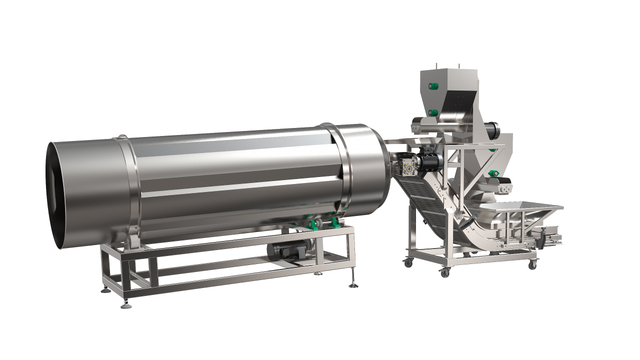
Upstream and downstream equipment dictate the required line speed. Extruders, dough sheeters, and batter applicators must feed the system at a consistent rate to prevent bottlenecks. Downstream seasoning drums and cooling conveyors must be sized to handle the maximum discharge rate. Mismatched line speeds lead to overcooked products, idle machinery, and severe bottlenecks on the factory floor.
Snack Type | Average Moisture Loss | Raw Input Required for 100kg Finished | Line Speed Considerations |
|---|---|---|---|
Fresh Potato Chips | 75% - 80% | ~400kg - 500kg | Requires high-capacity slicing and rapid moisture boil-off zones. |
Extruded Corn Puffs | 10% - 15% | ~115kg | Fast line speeds; requires hold-down conveyors to submerge floating product. |
Pellet Snacks (Half-products) | 5% - 8% | ~110kg | Extremely short retention times (10-20 seconds); requires rapid discharge. |
Coated Peanuts | 15% - 20% | ~125kg | Requires gentle handling to prevent coating separation and sediment buildup. |
Product behavior in hot oil dictates the mechanical design of the vat and conveyor system. Floating snacks, such as extruded puffs or donuts, require hold-down conveyors to keep them submerged for even cooking. Without a hold-down mechanism, the top of the product remains raw while the bottom burns. Conversely, heavy or sinking snacks need bottom-sweep conveyors to prevent them from dragging along the heating elements.
Coatings and particulates heavily influence machine selection. Batters, breadings, and heavy seasonings shed into the vat, creating sediment buildup. If your product sheds heavily, you need a machine equipped with specific sediment removal systems. Continuous scrapers or deep cold zones prevent carbonization. Carbonized sediment ruins oil quality, imparts a bitter taste to the food, and creates a severe fire hazard.
Batch fryers serve lower volume operations, frequent product changeovers, and specialty kettle-cooked items. They offer flexibility for facilities running multiple distinct product lines in smaller runs. Operators manually load a specific weight of raw product, monitor the cook time, and manually or semi-automatically extract the finished batch.
Tube Fryers: Best for heavy sediment or high-crumb snacks. The heating tubes sit above a cold zone where sediment settles without burning, extending oil life.
Open Pot Fryers: Versatile and easy to clean. They lack tubes inside the vat, making them best for lightly breaded, unbreaded, or frozen items where sediment is minimal.
Flat Bottom Fryers: Ideal for dough-based floating snacks like donuts, tempura, and tortilla chips. The wide, shallow design gives products space to float without snagging on mechanical parts.
Electric Floor Fryers: Highly efficient floor-standing units offering fast recovery times and small footprints. They suit dedicated medium-volume commercial lines with limited space.
The transition from batch to continuous systems typically occurs when production exceeds 500 pounds per hour. Continuous fryers are essential for high-volume, automated production lines where consistency is paramount. They eliminate the labor-intensive loading and unloading phases of batch cooking.
Continuous flow mechanics rely on automated conveying systems that move the product through the vat at a precise speed. This ensures consistent retention times for every piece. Furthermore, continuous systems utilize continuous oil turnover, constantly filtering and replenishing the fluid to maintain quality over long production runs. The oil level is maintained automatically via a level control float and a makeup tank.
Evaluate current manual labor hours spent on batch loading and unloading.
Calculate the exact hourly throughput required to meet peak seasonal demand.
Assess floor space availability for a linear continuous system versus multiple batch vats.
Determine if product consistency issues are stemming from manual batch timing errors.
Mobile and non-factory settings, such as outdoor snack stalls, concessions, and pop-up events, require specialized equipment. These units must balance commercial output with portability and variable utility access. You cannot simply place a standard factory unit on a trailer and expect it to function safely or efficiently.
Alternative fuel configurations are often necessary. Mobile units frequently rely on liquid propane (LPG) tanks rather than standard natural gas lines. Hardware modifications for mobile operations include heavy-duty locking casters for stability, wind guards to maintain burner efficiency outdoors, quick-disconnect fuel lines, and rapid drainage valves for safe transport. Sloshing hot oil during transport is a massive liability, so secure vat covers are mandatory.
Electric heating provides precise temperature control. Wattage requirements dictate heat recovery speed; higher total kilowatts allow the system to return to the target temperature faster after cold product is dropped. Electric units suit smaller footprints and regions with low electricity costs. They transfer heat directly into the fluid with nearly 100% efficiency, but high-capacity electric units draw massive amperage.
Direct gas firing utilizes burners to heat transfer tubes submerged in the vat or the exterior of the fry pot. You must evaluate burner efficiency and temperature recovery speed, especially for high-moisture products that cause significant temperature drops. Modulating gas valves provide better temperature stability than simple on/off gas valves.
Thermal fluid (indirect) heating pumps heated thermal oil through a heat exchanger within the vat. This method offers gentle heat transfer and zero hot spots, significantly extending cooking oil life. It is highly advantageous for large-scale continuous systems, despite the higher initial installation complexity. The remote boiler can be located in a separate utility room, keeping combustion out of the main processing area.
Heating Method | Heat Transfer Efficiency | Temperature Recovery Speed | Best Application |
|---|---|---|---|
Electric Elements | ~99% | Very Fast | Small to medium facilities, areas with cheap electricity, precise temperature needs. |
Direct Gas (Immersion Tubes) | 70% - 80% | Fast | Medium to large facilities, high-moisture products, areas with accessible natural gas. |
Thermal Fluid (Indirect) | 80% - 85% | Moderate to Fast | Massive industrial lines, sensitive oils, operations prioritizing maximum oil lifespan. |
Continuous systems require multi-zone temperature control. As cold product enters the vat, the temperature drops rapidly. Multi-zone systems apply more heat at the entry point and less at the exit, ensuring a consistent cooking profile throughout the length of the vat. Without multi-zone control, the entry end cools down too much, leading to greasy, oil-logged snacks.
Programmable Logic Controller (PLC) integration is vital for modern operations. PLCs manage recipe settings, automate retention time adjustments by controlling conveyor speeds, and provide data logging for Quality Assurance (QA) compliance and traceability. Operators can switch from a 60-second retention time for thin chips to a 120-second retention time for thick-cut chips with the push of a button.
Free Fatty Acid (FFA) buildup and oil degradation directly impact product flavor and operational costs. Extending oil life is a primary financial driver in commercial operations. Degraded oil foams, smokes at lower temperatures, and imparts a rancid flavor to the snacks.
Passive sediment removal utilizes sloped bottoms and cold zones to collect debris away from the heat source. Active continuous filtration systems, such as paper filters or centrifugal separation, actively pump fluid out of the vat, remove particulates, and return clean fluid to the system. Centrifugal systems spin the fluid at high speeds to separate heavy particulates without requiring disposable paper media.
Maintaining a low system volume is crucial. A lower volume relative to the hourly throughput ensures rapid turnover rates. High turnover means the fluid is absorbed by the product and replaced with fresh makeup fluid before it has time to degrade. If the vat holds too much fluid relative to the production rate, the fluid sits at high temperatures for too long and breaks down.
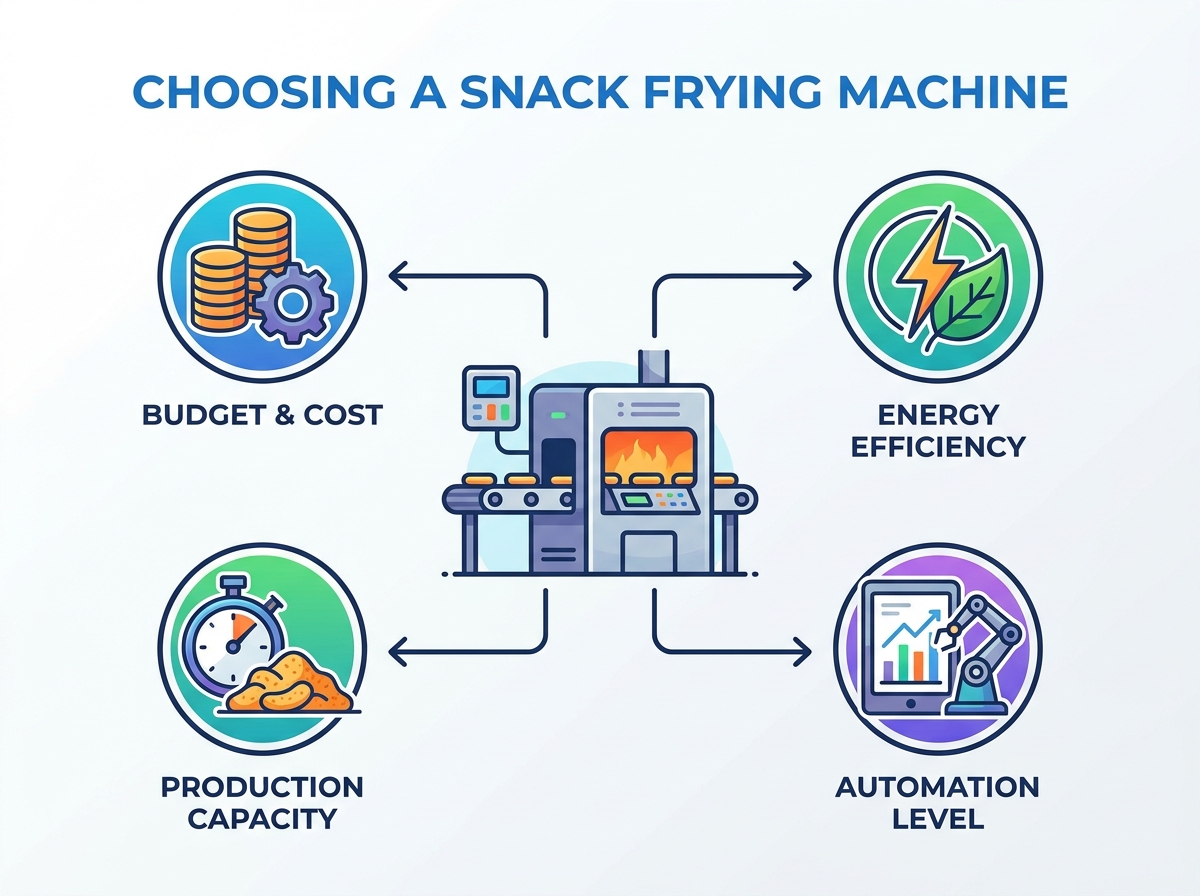
Comparing the upfront cost of a premium system against long-term utility savings requires analyzing gas versus electric efficiency ratings. A cheaper machine with poor insulation will cost more in fuel over its lifespan. Look for heavy-duty ceramic insulation around the vat to prevent heat loss into the factory environment.
Power draw constraints must be calculated carefully. You must match the Amperage and BTU demands of the equipment against your facility's limits to avoid costly electrical panel upgrades or gas line expansions. Upgrading a factory's main electrical service to accommodate a massive electric heater can add tens of thousands of dollars to the installation project.
Selecting equipment vendors involves assessing their testing capabilities, engineering customization options, and spare parts supply chains. A reliable vendor acts as a partner in your production process. Look for manufacturers who employ dedicated food scientists and process engineers, not just metal fabricators.
Factory Acceptance Testing (FAT) is critical. FAT verifies equipment performance, safety mechanisms, and throughput capacity at the manufacturer's facility before shipping, ensuring the machine meets your specifications. You should send your actual raw ingredients to the manufacturer's test lab to run a live trial before signing off on the equipment.
Proprietary parts carry hidden costs and can cause extended downtime if they are difficult to source. Standardized components, such as off-the-shelf bearings, motors, and sensors, are preferable for quick repairs. If a conveyor motor fails during a night shift, you need to be able to buy a replacement from a local industrial supply house.
Evaluate the manufacturer’s Service Level Agreement (SLA), warranty terms, and parts sourcing. Domestic parts availability generally ensures faster repair times compared to international sourcing. Ask the vendor for a recommended spare parts list and keep critical wear items in your own maintenance cage.
Installation involves physical realities. You must account for ceiling height for exhaust hood systems, floor load-bearing capacities for heavy continuous systems, and sufficient clearance around the machine for maintenance access. Mechanics need room to pull out conveyor frames and access burner tubes.
Plumbing for fluid management, gas line pressure requirements, and specific electrical phase configurations must be verified before installation begins. Natural gas lines must deliver the correct water column pressure to the burners; otherwise, the system will not reach its rated BTU output.
Verify exact floor dimensions and ceiling clearances, including ductwork routing.
Confirm the incoming gas pressure matches the burner specifications.
Check the electrical panel for sufficient available amperage and correct phasing.
Ensure floor drains are properly located and sized to handle sanitation washdown water.
Map out the forklift path for delivering raw materials and removing finished goods.
Mandatory safety integrations include automated fire suppression systems, fluid level sensors to prevent dry firing, and high-limit temperature shut-offs to prevent ignition. Dry firing occurs when the burners ignite without enough fluid in the vat, which can melt the heat exchanger tubes instantly.
Ventilation requirements, such as exhaust hoods and scrubber systems, are necessary to manage emissions, control grease vapors, and comply with local environmental and fire regulations. High-volume operations may require electrostatic precipitators to remove grease particulate from the exhaust air before it vents outside.
Clean-in-Place (CIP) systems are highly recommended for industrial units, automating the cleaning process and reducing labor. CIP systems use spray balls and high-pressure pumps to circulate caustic cleaning solutions through the vat, piping, and filtration systems.
Hygienic design principles include motorized hood lifts for easy access, the elimination of harborage points where bacteria can grow, and self-draining surfaces to minimize sanitation labor and cross-contamination risks. Tubular frames are preferred over angle iron because they do not collect water and debris.
Selecting the right equipment requires a systematic approach based on your production goals, product characteristics, and facility constraints. A well-integrated system maximizes yield, maintains consistent quality, and minimizes utility waste.
Define your exact hourly throughput requirements to determine if a batch or continuous system is necessary.
Audit your facility's utility capacities, specifically gas pressure and electrical amperage, before selecting a heating method.
Request detailed technical spec sheets and schedule a live product test run at the manufacturer's facility.
Establish a strict daily maintenance and sanitation protocol to protect your equipment investment.
As a food-processing machinery manufacturer specializing in twin-screw extrusion, puffing equipment, and customized production-line planning, Loomak combines equipment development, manufacturing, sales, and process support to serve different production requirements. Its integrated approach to process design, equipment configuration, and control systems helps snack manufacturers build more efficient, consistent, and application-specific processing lines.
A: Batch fryers cook a set amount of product at one time, requiring manual loading and unloading. They suit lower volumes and frequent product changes. Continuous fryers use automated conveyors to move product through the vat continuously, offering high throughput, lower labor requirements, and greater product consistency for large-scale operations.
A: Required wattage or BTU depends on the raw product's moisture content, the hourly volume you intend to process, and the necessary heat recovery speed. High-moisture products cause larger temperature drops, requiring higher heat input to maintain the target temperature and prevent greasy, undercooked snacks.
A: For high-sediment snacks like battered or heavily breaded items, tube fryers are ideal for batch operations because sediment falls into a cold zone below the tubes. For continuous operations, systems equipped with active bottom-sweep conveyors and continuous filtration systems are required to remove sediment before it burns.
A: Compare local utility costs, as natural gas is often cheaper for high-volume heating. Consider installation requirements; gas requires specific plumbing and venting. Electric units offer faster heat recovery speeds and precise control, and they may align better with facility carbon footprint reduction goals.
A: Industrial continuous systems utilize continuous filtration, constantly cycling fluid through filters during operation. Batch fryers typically require daily batch filtration. The frequency depends on the turnover rate—how quickly fresh fluid replaces fluid absorbed by the product—and the amount of sediment generated.
A: A thermal fluid heated system uses indirect heating. A remote boiler heats thermal oil, which is pumped through a heat exchanger inside the vat. It is necessary for high-capacity applications where gentle, uniform heat transfer is required to prevent degradation and hot spots.


