Views: 0 Author: Site Editor Publish Time: 2026-09-28 Origin: Site
Infant nutrition manufacturing operates under a zero-tolerance reality. Product recalls stemming from microbial contamination, foreign bodies, or nutritional inconsistency destroy brand equity permanently and trigger severe legal consequences. Plant managers and operations directors face a complex challenge daily. You must balance stringent global food safety regulations like FDA, EFSA, and FSMA requirements with the need for high-yield operational efficiency, rapid changeovers, and scalable output. Achieving this balance requires precision engineering and rigorous equipment validation.
We introduce a systematic, risk-based framework for evaluating, shortlisting, and procuring processing equipment. This guide ensures strict regulatory compliance and mitigates complex implementation risks. You will learn how to align machinery specifications directly with your product requirements. We explore sanitary design principles, core processing architectures, and advanced quality assurance integrations to help you engineer a highly capable processing system.
Global food safety standards dictate the baseline engineering requirements for any facility. You must align equipment specifications with GFSI-recognized schemes. These include SQF (Safe Quality Food) and BRCGS (Brand Reputation Compliance Global Standards). Auditors scrutinize every component for potential contamination risks. Equipment must facilitate complete traceability and prevent cross-contamination between batches through physical and software-based interlocks.
Hygienic design certifications act as mandatory prerequisites during procurement. Look for equipment bearing EHEDG (European Hygienic Engineering & Design Group) or 3-A Sanitary Standards certifications. These certifications guarantee specific manufacturing tolerances. Product-contact surfaces must utilize 316L stainless steel. The surface roughness (Ra) must remain below 0.8 micrometers. This microscopic smoothness prevents bacterial adhesion and ensures cleaning chemicals can effectively sanitize the metal during automated cycles. Welds must be ground flush and polished to match the surrounding metal.
Local regulatory bodies enforce additional mandates. The FDA requires strict adherence to 21 CFR Part 113 for thermally processed low-acid foods. FSMA mandates preventive controls for human food. Your machinery must provide verifiable data logging to prove compliance. Manual record-keeping introduces unacceptable risks. Automated compliance tracking protects the facility during unannounced regulatory inspections by providing instant, tamper-proof historical data.
Accurate throughput calculation prevents catastrophic production bottlenecks. You must calculate required throughput in kilograms per hour or units per minute. Base these metrics on current market demand and five-year growth projections. Undersized equipment forces operators to run machines beyond their rated capacity. This accelerates component wear, causes pump cavitation, and compromises food safety. Oversized equipment leads to inefficient utility usage and product degradation during extended holding times in buffer tanks.
Plant engineers must evaluate the trade-offs between continuous and batch processing. Continuous processing delivers high volume with exceptional consistency. It works best for dedicated product runs with minimal recipe variations. However, continuous systems offer low flexibility. Changeovers require extensive cleaning, pipe routing changes, and recalibration of thermal processing parameters.
Batch processing provides lower overall volume but high flexibility. It suits facilities producing multiple SKUs with frequent recipe changes. Batch systems allow operators to isolate specific runs easily. This isolation simplifies traceability and quality control. Your choice depends entirely on your product portfolio diversity and daily output targets. Many modern facilities utilize a hybrid approach, batching raw material preparation before feeding a continuous thermal treatment and packaging loop.
Infant development relies on specific heat-sensitive vitamins and nutrients. Processing equipment must achieve commercial sterility without degrading these essential compounds. Traditional thermal treatments often apply excessive heat. This destroys vitamin C, B-complex vitamins, and natural amino acids. You must evaluate the thermal dynamics of the proposed machinery, specifically looking at the heating curve and residence time.
Ultra-High Temperature (UHT) processing and retort sterilization represent the industry standards. UHT systems heat the product rapidly to temperatures exceeding 135°C for a few seconds. This short residence time minimizes nutritional degradation while achieving a high lethality (F0) value. Retort systems sterilize the product after packaging. They require precise temperature distribution inside the pressure vessel to avoid overcooking the outer layers of the puree while sterilizing the core.
Consumer demand shifts heavily toward minimally processed diets. Parents want purees that retain natural colors, textures, and flavors. You should evaluate gentle processing technologies to meet this demand. Ohmic heating uses electrical resistance to heat products uniformly and instantly, eliminating hot spots. High-Pressure Processing (HPP) utilizes extreme hydrostatic pressure instead of heat to deactivate pathogens. These advanced methods maintain the structural integrity of cellular walls in fruit and vegetable purees, resulting in a superior sensory profile.
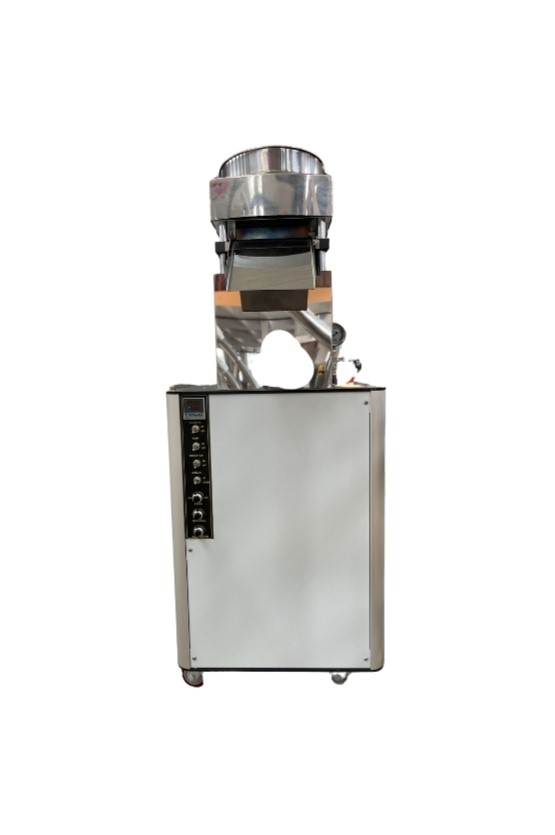
Wet processing requires a highly sequential series of specialized modules. The process begins with raw material preparation. Industrial washing flumes remove soil, stones, and pesticide residues. Automated peeling and core extraction machines process bulk fruits and vegetables rapidly. Milling equipment then reduces the raw materials into a coarse mash. You must select cold-extraction mills that minimize oxygen incorporation and heat generation during this reduction phase.
De-aeration represents a critical control point. Vacuum de-aerators remove dissolved oxygen from the mash. Oxygen causes rapid enzymatic browning and degrades vitamin C. Removing it preserves the product's natural color and nutritional profile. Following de-aeration, the product enters the homogenization phase. High-pressure homogenizers force the puree through narrow valves at pressures exceeding 200 bar. This intense shear force breaks down cellular structures. It creates the ultra-smooth texture required to prevent infant choking hazards and ensures uniform viscosity.
Thermal treatment follows homogenization. You must choose between pasteurization and aseptic processing. Pasteurization works for high-acid products like fruit compotes (pH below 4.6). Aseptic processing is mandatory for low-acid vegetable and meat purees. Aseptic systems sterilize the product and the packaging separately. They bring them together in a sterile environment. This method extends shelf life without chemical preservatives.
Packaging integrations define the final output. Modern wet lines frequently utilize spouted pouches. These require specialized rotary or inline filling machines capable of handling highly viscous fluids without dripping. Glass jars remain a staple, requiring vacuum-capping technology to ensure hermetic seals. Aseptic cartons offer sustainable alternatives. Your chosen Food Production Line must synchronize perfectly with these downstream packaging modules to prevent upstream bottlenecks.
Dry processing architectures differ entirely from wet lines. They focus on precise moisture control, powder handling, and explosion prevention. Infant formula production often begins with wet mixing. Operators blend raw dairy ingredients, vegetable oils, and vitamin premixes into a liquid slurry using high-shear mixers. This slurry undergoes pasteurization and homogenization before entering the drying phase.
Spray drying acts as the core technology for infant formula. High-pressure nozzles atomize the liquid slurry inside a massive drying chamber. Hot air instantly evaporates the moisture. The product falls to the bottom as a fine powder. You must evaluate the nozzle design and air distribution systems. Improper airflow causes powder to scorch on the chamber walls, creating burnt particles that ruin the batch.
Fluid bed drying often follows spray drying. It agglomerates the fine powder into larger, porous particles. This agglomeration makes the final formula instantly soluble in water. Dry blending systems handle the addition of heat-sensitive probiotics and specialized nutrients after the main drying process. These blenders must achieve perfect homogeneity without fracturing the fragile agglomerated particles.
Extrusion technologies dominate the production of infant cereals and teething snacks. Twin-screw extruders mix, cook, and shape grain-based flours continuously. The extruder barrel applies precise mechanical shear and thermal energy. This process gelatinizes starches, making them easily digestible for infants. The extrusion process generally follows these specific steps:
Packaging dry products requires strict atmospheric control. Modified Atmosphere Packaging (MAP) replaces oxygen with inert nitrogen gas. This prevents lipid oxidation and extends shelf life. Cans, composite cylinders, and single-serve sachets all require integrated MAP capabilities. Residual oxygen levels must consistently measure below two percent before sealing.
| Processing Architecture | Core Technologies | Typical Products | Critical Control Points (CCPs) | Primary Packaging Formats |
|---|---|---|---|---|
| Wet Processing | Homogenization, De-aeration, UHT, Retort | Fruit purees, vegetable mashes, meat blends | Thermal sterilization limits, Foreign body detection | Spouted pouches, glass jars, aseptic cartons |
| Dry Processing | Spray drying, Fluid bed agglomeration, Extrusion | Infant formula, rice cereals, teething wafers | Moisture content, Powder homogeneity, MAP oxygen levels | Metal cans, composite cylinders, foil sachets |
Engineering details dictate sanitary performance. You must evaluate the design of all piping, valves, and pumps. Dead legs present the highest contamination risk. A dead leg is any section of piping where product can stagnate. Industry standards dictate that the length-to-diameter (L/D) ratio of any branch must remain below 1.5. Furthermore, all horizontal piping must feature proper drainage slopes. A minimum slope of 1/8 inch per foot ensures gravity drains the system completely after cleaning.
Assess the automation level of Clean-in-Place (CIP) and Sterilize-in-Place (SIP) systems. Manual cleaning introduces human error and guarantees inconsistent results. Automated CIP systems control four critical parameters: time, action, chemical concentration, and temperature (TACT). The system must generate turbulent flow within the pipes. Fluid velocity must exceed 1.5 meters per second to provide adequate mechanical scouring action against the pipe walls.
Sensors must continuously monitor chemical concentrations and water temperatures. If a parameter falls below the validated setpoint, the PLC must automatically abort and restart the cleaning cycle. SIP systems utilize pressurized steam to sterilize the equipment boundary. The system must monitor temperature at the coldest point in the line. It ensures the entire circuit reaches 121°C for the validated duration before allowing product to enter.
Physical contamination destroys consumer trust instantly. You must integrate multiple layers of inspection technology. Integrated X-ray inspection systems provide the highest level of security. They detect dense foreign bodies like glass shards, metal fragments, and high-density plastics. X-ray systems also verify fill levels and check for missing components inside sealed cartons, providing a secondary quality check.
High-sensitivity metal detectors remain essential. They identify ferrous, non-ferrous, and stainless steel contaminants. You must position these detectors strategically throughout the process. Place them after raw material intake, after milling, and immediately before packaging. Automated vision systems inspect packaging integrity. They verify label placement, read barcodes, and inspect cap seals for microscopic defects that could compromise the hermetic seal.
Rejection mechanisms require careful engineering. When a detector identifies a contaminant, it must isolate the compromised unit immediately. The rejection mechanism must interface seamlessly with the main baby food production line. High-speed pneumatic pushers or air blasts divert rejected items into locked bins. This isolation occurs without halting the entire batch. The PLC logs every rejection event, providing data for root cause analysis and vendor accountability.
Modern manufacturing relies on sophisticated control architectures. Programmable Logic Controllers (PLCs) manage all physical machine movements. They execute recipe management protocols precisely. Parameter locking prevents unauthorized operator adjustments. Once a supervisor validates a thermal processing recipe, operators cannot alter the temperature or hold time. This lockdown prevents human error from compromising food safety.
Supervisory Control and Data Acquisition (SCADA) systems provide the overarching intelligence. SCADA aggregates data from every sensor, valve, and motor on the floor. It visualizes the entire process in real-time. Operators monitor tank levels, pressure differentials, and thermal trends from centralized control rooms. This visibility allows for proactive adjustments before a process deviates out of specification.
Data logging capabilities ensure audit readiness. The system must record every Critical Control Point (CCP) continuously. This includes pasteurization temperatures, metal detector checks, and CIP chemical strengths. Electronic records must comply with 21 CFR Part 11 requirements. This standard mandates secure, time-stamped audit trails and electronic signatures. When an auditor requests batch records, your SCADA system should generate a comprehensive, tamper-proof report instantly.
Consumer preferences shift rapidly, demanding diverse packaging formats. Your equipment must handle these variations efficiently. Assess the time and labor required for format changeovers. Switching a line from filling 100g pouches to 200g pouches can consume hours of production time. Prolonged downtime destroys Overall Equipment Effectiveness (OEE) and reduces facility profitability.
Evaluate the availability of tool-less changeover mechanisms. Operators should perform format adjustments using quick-release levers and standardized change parts. They should not need wrenches or specialized tools. Modular machine designs enhance flexibility further. You can swap out entire capping or filling modules on mobile carts. This plug-and-play architecture drastically reduces changeover times.
Apply Single-Minute Exchange of Die (SMED) principles to the packaging area. SMED methodology separates internal setup tasks (completed while the machine is stopped) from external setup tasks (completed while the machine is running). Equipment designed with SMED principles allows operators to prep the next packaging format while the current batch finishes. This engineering approach maximizes machine uptime and throughput.
Retrofitting new machinery into an existing facility footprint introduces severe spatial risks. Equipment dimensions often clash with structural columns, low ceilings, or existing piping racks. These clashes cause massive installation delays and require expensive field modifications. Utility constraints pose equal threats. A new thermal processing module might demand more peak steam pressure than your current boiler can generate, starving other lines of necessary heat.
Sensitive PLC and SCADA equipment remain highly vulnerable to grid fluctuations. Industrial environments experience frequent voltage sags, surges, and harmonic distortion. A momentary power dip can crash a PLC mid-batch. This forces operators to dump thousands of kilograms of partially processed product due to broken thermal sterilization records.
Mitigate these integration risks through rigorous upfront engineering. Conduct 3D laser scanning of the entire facility before finalizing the equipment layout. This creates a millimeter-accurate digital twin of your plant. Engineers use this model to route piping and verify clearances virtually. Perform detailed utility mapping. Calculate the peak demand for steam, chilled water, and compressed air. Mandate industrial power conditioning. Install surge protection, lightning arrestors, and Uninterruptible Power Supply (UPS) systems for all critical control panels.
Validation proves that the equipment performs exactly as specified under production conditions. Delayed commissioning due to failed validation protocols represents a massive project risk. If the equipment cannot maintain sterile boundaries or achieve target throughput, you cannot release the product to market. The V-model of validation requires meticulous documentation at every stage of the project lifecycle.
Mitigate this risk by mandating comprehensive Factory Acceptance Testing (FAT). The FAT occurs at the vendor's manufacturing facility before shipment. You must run the equipment using actual raw materials and packaging. Verify all mechanical movements, software interlocks, and CIP cycles. Do not authorize shipment until the equipment passes every FAT protocol.
Require the vendor to supply complete validation documentation. This includes Installation Qualification (IQ), Operational Qualification (OQ), and Performance Qualification (PQ) protocols. IQ verifies that every component matches the engineering drawings. OQ proves that the machine operates correctly across its full specified range. PQ demonstrates that the entire system produces acceptable product consistently under normal operating conditions.
Advanced machinery requires highly skilled personnel. Human error remains the leading cause of equipment damage and food safety breaches. Operators accustomed to manual processes often struggle to understand complex SCADA interfaces. Maintenance technicians face challenges troubleshooting sophisticated servo drives and automated mixproof valves. Inadequate training leads to frequent machine faults and prolonged downtime.
Structure your procurement contracts to mitigate this human risk. Include mandatory, multi-tiered vendor training programs. Training must encompass both classroom theory and hands-on operational practice. Operators need to understand the mechanics behind the process. They must comprehend the food safety implications of every alarm and interlock, rather than just memorizing button sequences.
Maintenance staff require deep technical training. Vendors should provide detailed troubleshooting guides, electrical schematics, and preventative maintenance schedules. Implement a train-the-trainer model. Select your best operators and technicians to receive advanced instruction. They will then train new hires, ensuring knowledge retention within your facility long after the vendor leaves.
A: Commercial processing equipment typically lasts 15 to 25 years. This lifespan depends heavily on rigorous preventative maintenance, the frequency of CIP cycles, and the initial quality of the components. High-grade 316L stainless steel and premium servo motors significantly extend operational longevity.
A: Space requirements vary drastically, ranging from 5,000 to over 50,000 square feet. Wet processing for purees generally requires less footprint than dry processing for formula, which demands massive spray drying towers. You must also account for raw material warehousing, cleanroom packaging zones, and finished goods storage.
A: Aseptic processing sterilizes the liquid product and the packaging materials separately, bringing them together in a sterile environment. Retort sterilization fills and seals the product into its final container first, then subjects the entire sealed package to high-pressure steam sterilization inside a massive pressure vessel.
A: CIP systems automate the circulation of water, caustic sodas, and acid sanitizers through the processing equipment without requiring manual dismantling. The system controls flow velocity, temperature, and chemical concentration to scour internal pipes. Advanced systems include water recovery modules to minimize environmental impact.
A: No. Purees and dry cereals require entirely different processing architectures. Purees utilize wet milling, homogenization, and thermal liquid sterilization. Cereals require powder handling, twin-screw extrusion, and fluid bed drying. You cannot run these vastly different physical processes on the same continuous equipment line.
A: Reputable manufacturers must hold ISO 9001 quality management certifications and provide CE or UL marks for electrical safety. Crucially, their equipment designs must adhere to strict sanitary guidelines, evidenced by active EHEDG (European Hygienic Engineering & Design Group) or 3-A Sanitary Standards certifications.


