Views: 0 Author: Site Editor Publish Time: 2026-09-28 Origin: Site
Infant food manufacturing carries uncompromising stakes. Strict microbiological safety, precise nutritional retention, and high starch digestibility form non-negotiable baselines. You cannot cut corners when feeding the most vulnerable population. The core operational challenge lies in scaling production. Facilities must increase throughput without degrading heat-sensitive nutrients. They must also eliminate cross-contamination risks during high-speed processing.
Modern extrusion technology serves as the primary industrial mechanism to solve these challenges. It achieves the necessary starch gelatinization and pathogen lethality simultaneously. We will explore how the baby food extrusion process transforms raw ingredients into safe, highly digestible infant cereals. This guide evaluates the mechanics, equipment selection, and risk mitigation strategies required for a high-performance production line.
A successful infant cereal must meet strict physical and biological criteria before it ever reaches a packaging line. First, it requires high solubility, measured industrially by the Water Solubility Index (WSI). The powder must dissolve rapidly in warm milk or water without clumping. Second, viscosity control is mandatory. Operators measure this using a Bostwick consistometer to ensure the mixed cereal maintains a smooth, easily swallowable texture that will not choke an infant.
Third, high digestibility ensures infant stomachs can process the complex carbohydrates. Raw starch passes right through an infant's digestive tract, causing severe distress. Finally, microbiological safety remains absolute. The final product must show zero presence of harmful pathogens like Salmonella or Cronobacter. Achieving all four criteria simultaneously at industrial speeds requires precise mechanical intervention.
Extrusion combines several unit operations—mixing, cooking, kneading, and forming—into one continuous machine. A loss-in-weight feeding system introduces raw materials into a cylindrical barrel. Inside this barrel, rotating screws take over. They mix the dry ingredients with injected liquids like water and steam.
The screws convey the heavy dough forward through distinct zones. As the material moves, the channel depth between the screw flights decreases. This reduction creates intense mechanical shear and pressure. Ultimately, the screws force the cooked dough through a restricted opening called a perforated die plate, shaping the product as it exits the machine.
Extrusion relies on thermo-mechanical energy to transform raw flours. Heat transfers through the barrel walls via electric heaters or steam jackets. Moisture comes from injected liquids. Pressure builds as the screws push material against the restrictive die. Mechanical shear generates internal friction, measured as Specific Mechanical Energy (SME). This friction acts as a massive secondary heat source.
Together, these forces break down the crystalline structure of raw starch granules. The starch absorbs water, swells, and bursts in a process known as gelatinization. This transformation creates pre-cooked, instant-soluble cereals ready for infant consumption. Without sufficient SME and thermal input, the starch remains raw and indigestible.
Infant cereals require delicate thermal management. HTST processing solves the conflict between cooking the starch and preserving the nutrients. Inside the extruder, the dough reaches peak temperatures rapidly, often hitting 130°C to 150°C. However, it stays at this maximum heat for only 10 to 20 seconds.
This brief exposure provides a lethal blow to bacteria. It destroys anti-nutritional factors like lipoxygenase enzymes that cause rancidity in oat-based formulas. Because the duration is so short, it prevents the severe degradation of essential amino acids like lysine. HTST ensures the cereal remains both microbiologically safe and highly nutritious.
The process begins long before ingredients enter the extruder. Raw material intake demands strict quality control. Facilities process rice, wheat, oats, and corn. Each grain requires rigorous inspection for mycotoxins, heavy metals, and pesticide residues. Operators use magnetic separators to remove tramp metal and rotary sifters to eliminate oversized foreign materials.
Modern recipes often include diverse nutritional inclusions. Facilities add dehydrated fruit, vegetable powders, or protein isolates. These inclusions must meet strict microbiological baselines before blending. Any contamination here threatens the entire production run.
Precise particle size reduction is mandatory for extrusion success. Facilities follow a strict milling sequence:
Uniform particle size ensures even hydration. If particles vary wildly, larger granules will remain uncooked, creating hard spots in the baby food. Smaller granules will burn, causing bitter flavors. Consistent milling guarantees uniform extrusion and a smooth final texture.
Pre-conditioning prepares the raw flour for the extruder barrel. The dry mix enters a large mixing cylinder mounted above the extruder. Here, operators inject live steam and hot water directly into the flour. Rotating paddles vigorously blend the moisture into the mix. The mixture remains in this cylinder for one to three minutes.
Proper pre-conditioning dramatically improves line efficiency. It increases overall throughput by up to 30%. Hydrated, warmed flour requires less mechanical energy to push through the barrel. This reduces wear on the expensive extruder screws and liners. Most importantly, the heat and moisture initiate starch gelatinization early, giving the extruder a head start on the cooking process and ensuring a more uniform melt.
The pre-conditioned dough drops into the extruder barrel. The barrel contains distinct processing zones, each serving a specific function. The feeding zone remains relatively cool (around 40°C) to prevent the wet dough from sticking to the feed throat. The kneading zone applies intense mechanical shear using specialized reverse-pitch screw elements to mix the dough thoroughly.
The cooking zone elevates the temperature to achieve final gelatinization. Baby food requires specific pressure and temperature profiles. Barrel temperatures range between 120°C and 150°C in the final zones. Pressures at the die head can exceed 60 bar. Operators monitor these parameters continuously via PLC interfaces. Even minor deviations in SME or temperature can alter the solubility of the final powder.
The perforated die dictates the final physical transformation. As the pressurized dough exits the die, it enters atmospheric pressure. This sudden pressure drop causes superheated water within the dough to flash into steam. The steam expands the dough matrix, creating a porous cellular structure. A high-speed rotary knife immediately cuts the expanding dough into small pellets or puffs.
The extrudate exits the die with elevated moisture, typically holding 15% to 20% water. Operators convey these wet puffs pneumatically or via sanitary belt conveyors into a multi-pass convective dryer. The dryer uses hot air (around 100°C to 120°C) to reduce moisture levels below 5%. This low moisture content guarantees long-term shelf stability and prevents mold growth during warehouse storage.
Secondary milling transforms the dried puffs into the final product. Facilities use pin mills or classifier mills to crush the expanded pellets. They reduce the material into a fine, highly soluble powder. The porous structure created during extrusion makes this milling step highly efficient compared to milling dense, unexpanded pellets.
The final phase involves dry-blending. Extrusion heat destroys certain delicate nutrients, particularly Vitamin C and B vitamins. Facilities use sanitary ribbon or paddle blenders to add these heat-sensitive vitamins back into the powder. They also fold in essential minerals and probiotics. Adding these components post-extrusion avoids thermal degradation, ensuring the infant receives the exact nutritional profile printed on the label.
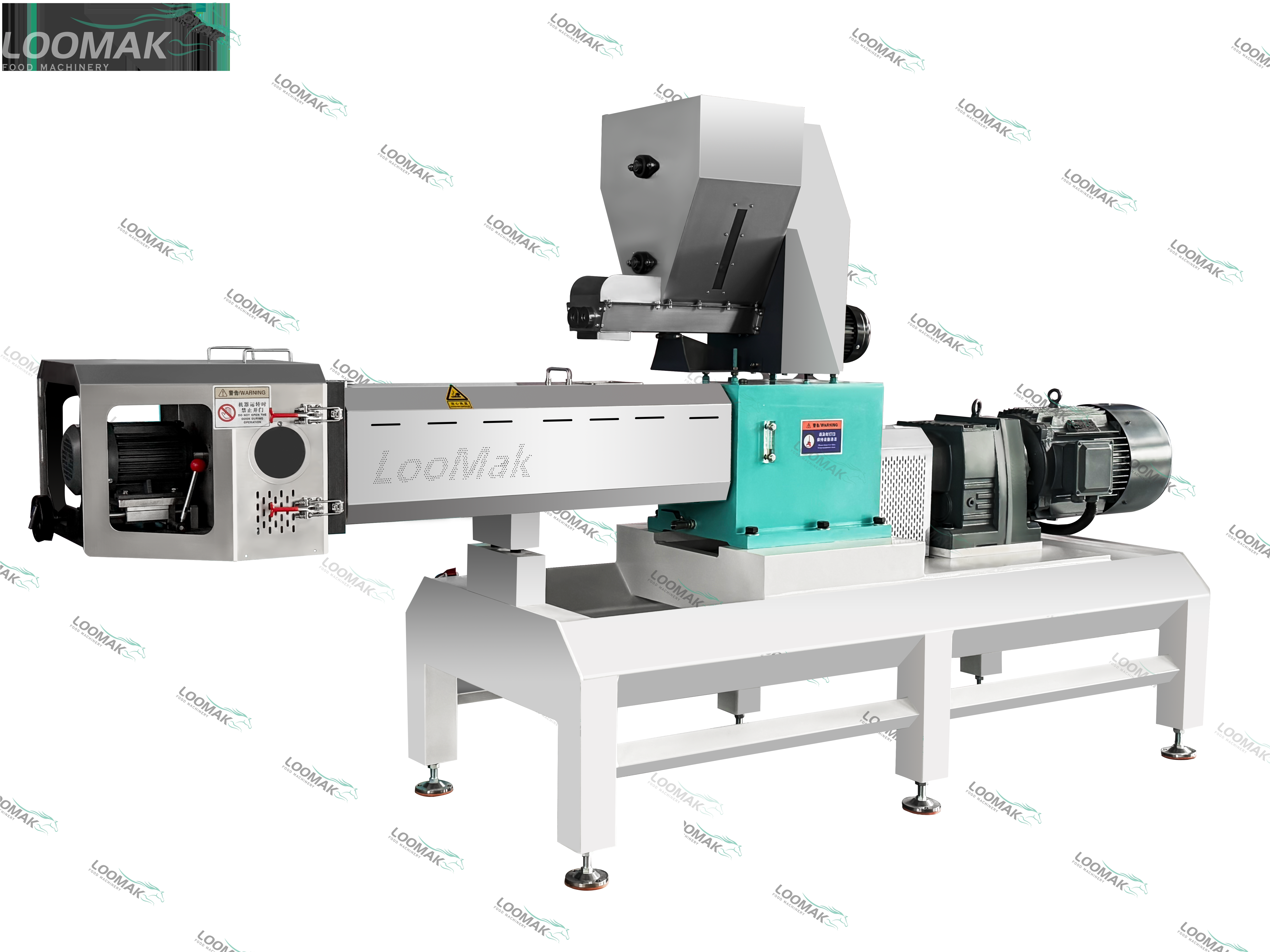
Single screw extruders rely entirely on friction against the barrel wall to move material forward. They struggle with the high-viscosity formulations required for modern infant cereals. Single screws offer poor mixing capabilities because they lack the intermeshing action needed to fold ingredients together. They cannot effectively blend complex recipes containing high fat or sugar levels, which act as lubricants and cause material to slip backward (backflow).
Heat distribution remains inconsistent in single screw machines. Material near the heated barrel wall cooks faster than material near the cooler screw shaft. This inconsistency leads to uneven starch gelatinization, resulting in baby food that clumps when mixed with water. Furthermore, single screws offer limited ingredient flexibility. Changing recipes often requires pulling the shaft and replacing the entire screw profile, causing massive production delays.
A Twin Screw Extruder represents the industry standard for infant food production. These machines utilize two co-rotating, fully intermeshing screws mounted on parallel shafts. The screws wipe each other clean as they rotate. This positive displacement mechanism forces material forward regardless of viscosity, fat content, or moisture levels.
Twin screws handle diverse raw materials effortlessly. The intermeshing action provides intense, uniform mixing. It ensures even heat distribution throughout the entire dough mass, guaranteeing consistent gelatinization across the batch. The self-wiping capability prevents material buildup on the screw flights. Stagnant material in a hot barrel will burn, creating black specks in the final product and harboring bacteria. The self-cleaning nature of twin screws eliminates these dead zones.
| Technical Parameter | Single Screw Extruder | Twin Screw Extruder |
|---|---|---|
| Conveying Mechanism | Friction-dependent | Positive displacement |
| Mixing Capability | Poor (Prone to channeling) | Excellent (Intermeshing shear) |
| Moisture Handling Range | Narrow (Typically 15-20%) | Wide (10-40%+) |
| Self-Cleaning Action | None (Requires manual teardown) | High (Screws wipe each other) |
| SME Control | Limited | Highly adjustable via screw profile |
| Suitability for Infant Cereal | Marginal (High risk of ungelatinized starch) | Industry Standard |
Precise thermal control separates adequate machines from superior ones. Evaluate the necessity of segmented barrel heating and cooling zones. Advanced extruders use independent PID controllers for each barrel section, paired with internal water-cooling jackets and electric cartridge heaters. This allows operators to create precise temperature profiles. Proper temperature control correlates directly to final product quality. It prevents the Maillard reaction from darkening the cereal, protects delicate flavors, and maximizes nutrient retention by avoiding unnecessary heat exposure.
Production lines must adapt to shifting market demands. Assess how modular screw profiles facilitate rapid changeovers. Modern twin screws use splined shafts. Operators can slide individual screw elements—conveying screws, kneading blocks, and reverse elements—on and off the shaft to build custom profiles. This allows them to adjust shear rates for different recipes. Quick-release die heads and swing-away cutter assemblies also minimize downtime. Manufacturers can pivot from a rice-based formula to a multi-grain blend in hours rather than days.
Capital investments require maximum utilization. Evaluate the machine's capacity to produce a variety of foods. A robust extrusion line should not sit idle. By simply changing die plates, adjusting cutter speeds, and modifying the screw configuration, facilities can expand their product portfolio. They can produce toddler finger foods, manufacture extruded snacks, or run standard breakfast cereals. This multi-product versatility maximizes production line profitability and accelerates the return on investment.
Infant food equipment must meet the strictest sanitary standards globally. Look for machinery designed to EHEDG or 3-A Sanitary Standards. The construction material for all product-contact surfaces must be high-grade stainless steel, typically 316L, with a surface roughness (Ra) of less than 0.8 µm. The design must eliminate dead zones, crevices, and exposed threads where water or product can pool. Automated Clean-in-Place (CIP) systems are mandatory. CIP utilizes high-pressure spray balls to sanitize the barrel and die without complete disassembly, ensuring microbiological safety while drastically reducing cleaning labor.
The most severe risk in infant food production is pathogen contamination. Salmonella and Cronobacter pose lethal threats to infants. Cross-contamination often occurs when raw flour dust from the intake area settles on finished, extruded products cooling on the belt.
Aggressive extrusion parameters can damage the product. Excessive mechanical shear breaks down protein structures and degrades the starch matrix too far, creating a sticky, unpalatable texture when the powder is mixed with milk. Too much heat destroys natural vitamins.
Industrial extruders consume massive amounts of energy and utilities. Underestimating these requirements will halt an installation project. Insufficient steam pressure will prevent proper pre-conditioning, while inadequate chilling capacity will cause the barrel to overheat and burn the product.
The production of safe, digestible infant cereal leaves no room for error. The process relies entirely on the precise balance of thermo-mechanical energy. Facilities best achieve this balance through advanced twin screw technology. By controlling heat, moisture, and shear, manufacturers transform raw grains into essential early-life nutrition while guaranteeing pathogen destruction.
Procurement and engineering teams must evaluate machinery rigorously. Prioritize OEMs that offer modular screw designs, robust CIP capabilities, and sanitary construction. Look for multi-product versatility to ensure long-term line profitability. Always insist on transparent Factory Acceptance Testing (FAT) protocols before shipment.
To move forward with your extrusion line implementation, follow these next steps:
A: Moisture levels vary throughout the process. During pre-conditioning, operators raise the raw flour moisture to 25-30%. Inside the extruder barrel, this moisture facilitates starch gelatinization and prevents burning. Upon exiting the die, the wet extrudate holds roughly 15-20% moisture. Post-extrusion drying must reduce this final moisture content below 5% to ensure long-term shelf stability and prevent microbial growth.
A: Twin screw machines utilize intermeshing screws that provide superior mixing and consistent heat distribution, ensuring uniform starch gelatinization. The screws wipe each other clean during operation. This self-cleaning action prevents material buildup, eliminates dead zones, and stops product from burning. It handles complex, fortified recipes with varying fat contents much better than single screw alternatives.
A: Extrusion utilizes the High-Temperature Short-Time (HTST) principle. The rapid heat application increases starch digestibility and destroys harmful anti-nutritional factors. It preserves most structural macronutrients and amino acids due to the short residence time. However, intense heat does degrade certain heat-sensitive vitamins. Manufacturers mitigate this by dry-blending essential vitamins and probiotics into the powder post-extrusion.
A: Mechanical food extrusion is an industrial manufacturing process involving forcing mixed, heated ingredients through a perforated die to create shaped, cooked foods like cereal. The infant extrusion reflex is a natural, involuntary human response. It occurs when a baby pushes their tongue forward and outward to reject solid objects from the mouth, typically fading around four to six months of age.
A: The extruder acts as a critical kill step for pathogens. Inside the barrel, the dough faces extreme conditions. Temperatures often exceed 130°C, combined with high pressure and intense mechanical shear. This hostile environment effectively destroys dangerous bacteria like Salmonella and E. coli. Strict hygienic zoning post-extrusion prevents recontamination before packaging.
A: Yes, a single line can handle both. Modern extruders feature modular screw profiles and adjustable parameters to process different grains. However, running allergens like wheat and gluten-free products like rice on the same equipment requires rigorous management. Facilities must implement strict hygienic changeover procedures and validated Clean-in-Place (CIP) protocols to prevent dangerous allergen cross-contamination between batches.


